
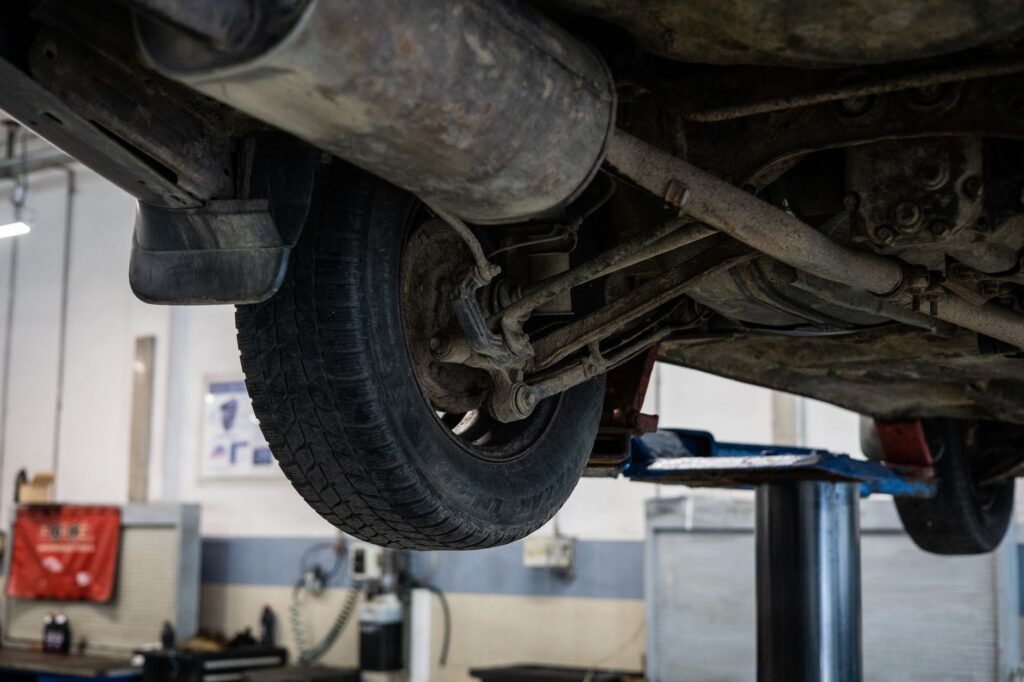
To align car tires, a technician measures and adjusts your vehicle’s wheel angles to match the manufacturer’s specifications. Although you can recognize alignment problems at home, correcting them typically requires specialized alignment equipment. Common signs that your vehicle needs an alignment include pulling to one side, an off-center steering wheel, uneven tire wear, and changes in handling.
For drivers in Plano, TX, rough pavement, potholes, construction zones, and everyday driving can contribute to alignment problems. Addressing them early can help protect your tires, improve handling, and reduce unnecessary wear.
In this guide, Mike’s Tires Plano explains how wheel alignment works, the warning signs to watch for, estimated alignment costs, and how often to schedule an alignment check.
What Is Wheel Alignment?
Wheel alignment, sometimes called tire alignment, refers to adjusting the angles of your vehicle’s wheels and suspension so they meet the manufacturer’s specifications. It does not involve physically repositioning the tires on the rims.
Correct alignment helps your vehicle track straight, respond predictably to steering input, and distribute tire wear more evenly. When the angles fall outside the recommended range, your tires may wear unevenly, and your vehicle may pull to one side or feel less stable.
Technicians generally evaluate three primary alignment angles:
- Camber: The inward or outward tilt of a wheel when viewed from the front of the vehicle. Incorrect camber can contribute to excessive wear along the inner or outer edge of a tire.
- Toe: The direction the tires point when viewed from above. If the tires point too far inward or outward, they can scrub against the road and wear prematurely.
- Caster: The angle of the steering axis when viewed from the side. Caster affects steering stability, steering-wheel return, and directional control.
The correct settings depend on your vehicle’s make, model, suspension design, and manufacturer specifications. A technician measures the current angles and makes the appropriate adjustments where possible.
5 Signs Your Car Needs a Wheel Alignment
Alignment problems can develop gradually or appear after a significant impact. Watch for these five warning signs.
1. Your Car Pulls to the Left or Right
If your vehicle consistently drifts to one side while driving on a straight, level road, misalignment could be the cause. You may find yourself making constant steering corrections to keep the car moving straight.
However, pulling does not always mean your wheels are misaligned. Uneven tire pressure, tire construction differences, road slope, brake problems, or worn suspension components can also cause similar symptoms.
Start by checking your tire pressure. If the vehicle continues to pull, have a technician inspect the tires, steering, suspension, and alignment.
Learn how to check tire pressure before assuming alignment is the only issue.
2. Your Steering Wheel Is Off-Center
When driving straight on a level road, your steering wheel should generally sit near its centered position. If it remains noticeably tilted to the left or right, your vehicle may have an alignment issue.
An off-center steering wheel can develop after suspension work, a significant road impact, or incorrect alignment adjustments. A technician can determine whether the steering position needs correction or whether another component is responsible.
3. Your Tires Have Uneven or Rapid Tread Wear
Misalignment can cause tires to scrub against the road instead of rolling as intended. This friction may lead to feathered tread blocks, excessive wear along one edge, or faster wear on one tire compared with the others.
Check your tires regularly for uneven tread depth and unusual wear patterns. If you notice damage or wear concentrated along the inner or outer edges, schedule an inspection before replacing the tires.
Our guides on how to check tire tread and how long tires last explain how to recognize tire wear and understand tire lifespan.
4. Your Vehicle Feels Unstable or Handles Differently
A vehicle with alignment problems may feel less predictable when cornering, changing lanes, or traveling at highway speeds. You might notice that the steering requires more correction than usual or that the vehicle does not track as smoothly as it once did.
These symptoms can also indicate worn suspension parts, tire problems, or steering-system issues. If handling changes suddenly, avoid high-speed driving until the vehicle has been inspected.
Steering-wheel vibration is another symptom worth investigating, although it more commonly points to wheel imbalance, tire damage, or another mechanical issue than to alignment alone.
5. You Recently Hit a Pothole or Curb
A hard impact with a pothole, curb, or road debris can affect your vehicle’s alignment. In some cases, it can also bend a wheel or damage suspension and steering components.
Even if your car still appears to drive normally, a significant impact is a good reason to schedule an inspection. Look for new pulling, steering-wheel changes, tire damage, or unusual noises.
If you suspect a damaged wheel, review our wheel repair guide for additional warning signs.
How to Align Car Tires: What the Process Involves
If you are wondering how to align car tires, the process generally involves measuring wheel angles, comparing them with manufacturer specifications, and adjusting the components that control those angles.
Although the exact procedure varies by vehicle, a professional alignment typically follows these steps.
Step 1: Inspect the Tires and Suspension
Before making adjustments, the technician checks tire condition and pressure and looks for worn or damaged steering and suspension components. Loose joints, worn bushings, damaged parts, or other mechanical problems can prevent the vehicle from maintaining the correct alignment.
These issues may need to be repaired before alignment adjustments can be completed properly.
Step 2: Position the Vehicle on an Alignment Rack
The vehicle is positioned on a level alignment rack. Specialized sensors or targets are attached to the wheels, allowing the equipment to measure their current angles.
The technician may also check steering-wheel position and other vehicle-specific settings to help ensure accurate measurements.
Step 3: Measure the Wheel Angles
The alignment system measures relevant angles, including camber, caster, and toe, where applicable. The readings are compared with the specifications for the vehicle.
This measurement helps identify which angles are outside the recommended range and whether additional mechanical inspection is necessary.
Step 4: Make the Necessary Adjustments
The technician adjusts the available alignment settings to bring them within the manufacturer’s specifications.
The adjustments depend on the suspension design. Some vehicles allow adjustment of all three primary angles, while others have limited factory adjustments. If a measurement cannot be corrected, the technician may need to investigate worn, bent, or damaged components.
Step 5: Verify the Results
After making adjustments, the technician rechecks the measurements and confirms that the settings are within the appropriate range.
Many shops provide a before-and-after alignment report so you can see the original readings and the final results. A road test may also be performed when appropriate to check steering-wheel position and vehicle tracking.
Can you align car tires yourself? You can check tire pressure, inspect tread wear, and look for obvious damage at home. However, accurate alignment generally requires specialized equipment and knowledge of your vehicle’s specifications. A professional inspection is the most reliable way to diagnose and correct alignment problems.
How Plano Road Conditions Can Affect Wheel Alignment
Drivers in Plano and the wider Dallas–Fort Worth area regularly encounter construction zones, pavement repairs, uneven road surfaces, and potholes. Repeated impacts can place stress on wheels, steering components, and suspension parts.
A single significant impact may alter alignment or damage a component. Smaller impacts may also contribute to wear over time, although alignment does not automatically change every time you drive over rough pavement.
North Texas weather and road conditions also make routine tire inspections worthwhile. Maintaining proper tire pressure and checking tread condition can help you identify problems before they become more serious.
For additional ways to protect your tires in local conditions, read our guide to tire maintenance tips for Texas heat.
How Much Does Wheel Alignment Cost in Plano, TX?
Wheel alignment prices depend on your vehicle, suspension design, the type of alignment required, and the shop’s pricing. As a general estimate, drivers may encounter the following ranges in the Plano area:
Two-Wheel or Front-End Alignment
A two-wheel alignment focuses on the wheels and angles covered by the vehicle’s front-end alignment specifications. It may be appropriate for certain vehicles, including some models with solid rear axles.
Estimated cost: $60–$100.
Not every vehicle can be properly aligned with a front-end service alone. The correct service depends on the vehicle’s design and manufacturer requirements.
Four-Wheel Alignment
A four-wheel alignment measures and adjusts the relevant angles at all four wheels. It is commonly recommended for vehicles with independent rear suspension and other designs where rear alignment settings affect vehicle tracking.
Estimated cost: $100–$175.
These figures are general estimates, not guaranteed quotes. Actual prices may be higher or lower depending on the vehicle and local shop.
What Affects Alignment Pricing?
Several factors can influence the final price:
- Vehicle type: Some trucks, SUVs, luxury vehicles, and specialized suspension systems require additional work.
- Alignment type: Two-wheel and four-wheel services involve different procedures.
- Suspension condition: Worn, bent, seized, or damaged components may require repair before an alignment can be completed.
- Equipment and service scope: The shop’s equipment, labor rates, diagnostic process, and included reports can affect pricing.
Before booking, ask which alignment service your vehicle needs, what the quoted price includes, and whether additional repairs may be required.
For more information about wheel-related services, visit our wheel repair service page.
How Often Should You Get a Wheel Alignment?
There is no single alignment interval that applies to every vehicle. Follow your owner’s manual and manufacturer recommendations, and schedule an inspection whenever you notice symptoms or experience a significant impact.
As a practical maintenance habit, you can ask a technician to check alignment during routine tire service, especially if you have noticed uneven tread wear or steering changes.
Consider an alignment inspection when you:
- Hit a significant pothole or curb.
- Notice that your vehicle pulls to one side.
- Find an off-center steering wheel or unusual tire wear.
- Replace or repair steering and suspension components.
- Install new tires and want to establish a baseline for tire wear.
- Notice changes in handling after an accident.
You do not necessarily need a full alignment every time you rotate your tires. An inspection can help determine whether adjustments are needed.
Our guide on how often to rotate tires explains how regular tire rotation fits into a maintenance routine.
If your tires are already worn beyond safe limits, an alignment alone will not restore their tread. Explore our selection of new tires or compare options in our used tires inventory.
Wheel Alignment vs. Wheel Balancing: What’s the Difference?
Wheel alignment and wheel balancing are different services, although both can affect how your vehicle feels on the road.
Wheel alignment adjusts wheel angles and suspension geometry to help the vehicle track correctly and reduce abnormal tire wear.
Wheel balancing corrects uneven weight distribution in a wheel-and-tire assembly. An imbalance can cause vibration, especially at certain speeds.
For example, a steering wheel that sits off-center may indicate an alignment issue, while vibration that becomes noticeable at highway speeds may suggest an imbalance or tire problem.
The symptoms can overlap, so a technician should inspect the vehicle rather than assume that one service will resolve every concern.
What Happens If You Ignore Wheel Alignment Problems?
Driving with misaligned wheels may cause several problems over time.
- Premature tire wear: Incorrect angles can cause excessive wear along certain parts of the tread, shortening the usable life of your tires.
- Reduced handling consistency: Your vehicle may require more steering correction or feel less predictable.
- Additional maintenance costs: Replacing tires early or overlooking damaged suspension components can increase repair expenses.
- Potential efficiency losses: Excessive tire scrub can increase rolling resistance, although the effect on fuel economy varies by vehicle and the severity of the problem.
Alignment is not a substitute for maintaining tire pressure or repairing damaged suspension parts. If you notice unusual handling, tire wear, or steering changes, an inspection can help identify the underlying cause before further damage occurs.
Frequently Asked Questions About Car Tire Alignment
Can I align my car tires at home?
You can check tire pressure, inspect tread wear, and look for obvious damage at home. However, accurate wheel alignment generally requires specialized equipment to measure wheel angles against manufacturer specifications. A qualified technician can also identify worn or damaged components that may prevent proper adjustment.
Does wheel alignment affect tire life?
Yes. Misalignment can cause uneven or accelerated tread wear, potentially shortening tire life. Correcting the underlying problem helps reduce unnecessary wear, although tire condition, pressure, rotation, driving habits, and road conditions also affect how long tires last.
Should I get an alignment when installing new tires?
An alignment inspection is a good idea when installing new tires, particularly if your previous tires showed uneven wear or your vehicle has steering or handling symptoms. Alignment is not automatically required with every tire replacement, but correcting an existing problem can help protect your new tires.
How long does a wheel alignment take?
A routine alignment commonly takes about 30–60 minutes, depending on the vehicle and service. Additional time may be necessary if the technician finds worn components, seized adjustment hardware, or damage that requires repair.
Can wheel alignment fix a car that pulls to one side?
It can if misalignment is the cause. However, tire pressure differences, tire-related issues, brake problems, and suspension damage can also cause pulling. A technician should diagnose the source before deciding which repair is appropriate.
Does every vehicle need a four-wheel alignment?
No. The correct alignment service depends on the vehicle’s suspension design and manufacturer specifications. Some vehicles require a four-wheel alignment, while others may be serviced with a two-wheel alignment. A technician can determine the appropriate procedure for your vehicle.
Is wheel alignment the same as tire balancing?
No. Alignment corrects wheel angles, while balancing corrects uneven weight distribution in the wheel-and-tire assembly. Both services address different problems, and the right one depends on your vehicle’s symptoms and inspection results.
Keep Your Vehicle Tracking Straight with Wheel Alignment Service in Plano, TX
If your vehicle pulls to one side, your steering wheel sits off-center, or your tires are wearing unevenly, do not ignore the warning signs. A timely inspection can help identify alignment problems, protect your tires, and support consistent handling.
Mike’s Tires Plano can help you determine whether your vehicle needs an alignment inspection or additional tire and wheel service. Visit our wheel repair service page to learn more, explore our new tire options, or contact us to ask about service for your vehicle.
Take care of alignment concerns early to help your tires last longer and keep your vehicle tracking straight on Plano roads.