
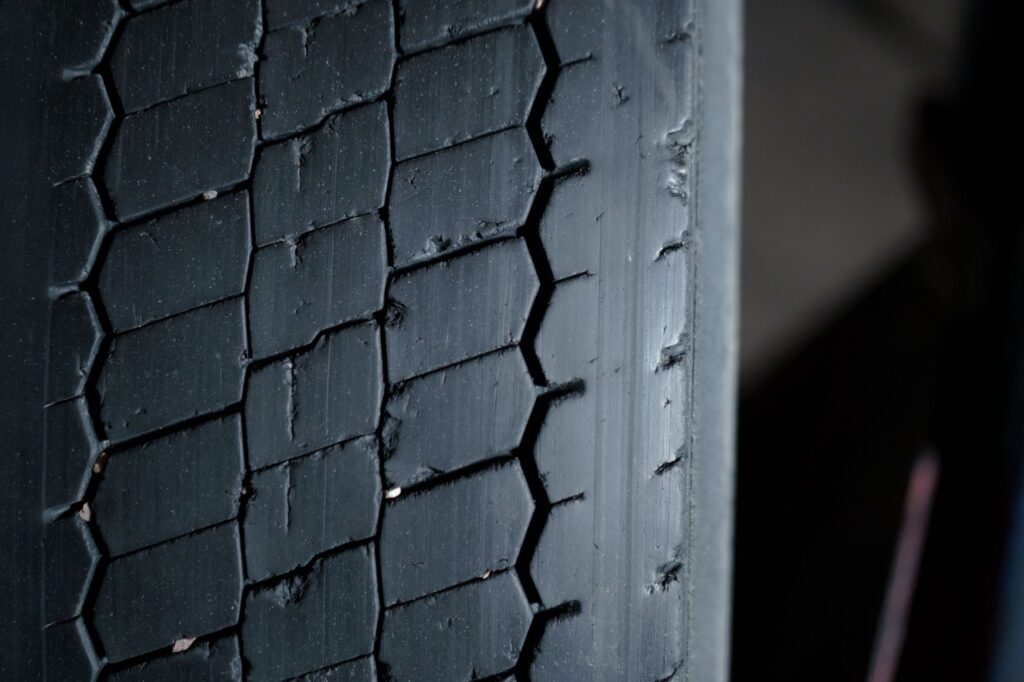
If you have ever run your thumb across a worn tire and wondered whether it will get you through another North Texas rainstorm, learning how to check tire tread is one of the simplest and most important car-care skills you can pick up. Your tires are the only four points of contact between your vehicle and the road, and as the tread wears down, grip, wet-weather braking, and hydroplaning resistance all fade — often long before you notice a difference in the driver’s seat. The good news is that you do not need a shop or a scanner to get a solid read on your tread. A penny, a quarter, and two minutes in your driveway will tell you most of what you need to know, and the folks at Mike’s Tires in Plano can confirm it for free anytime you want a second opinion.
Why Tire Tread Depth Actually Matters
Tread is not just decoration — those grooves are engineered to channel water out from under your tire so the rubber can stay in contact with the pavement. As tread wears down, three things get measurably worse:
- Grip and cornering: Shallow tread means less rubber biting into the road, longer stopping distances, and a twitchier feel in turns.
- Wet braking: Studies consistently show that stopping distance on wet roads grows dramatically once tread drops below 4/32″. A tire that stops fine when new can add many extra feet of braking distance when worn.
- Hydroplaning: When grooves can no longer evacuate water fast enough, the tire rides up on a film of water and you lose steering and braking control entirely. Around Plano, Frisco, and McKinney, our sudden spring and summer downpours make this a real, seasonal risk.
Bald tires are also more prone to blowouts on hot Texas asphalt, where surface temperatures can soar in July and August. Checking tread regularly is cheap insurance against an expensive, dangerous surprise.
How to Check Tire Tread with the Penny Test and the Quarter Test
The classic at-home method costs one cent. Here is the step-by-step:
The Penny Test (Lincoln’s Head)
- Grab a penny and hold it so Lincoln’s head is upside down and facing you.
- Insert the penny into a tread groove so Lincoln’s head points down into the tire.
- If part of his head is always covered by the tread, you have more than 2/32″ left. If you can see the very top of his head, your tread is at or below 2/32″ — the point at which a tire is worn out and, in Texas, legally due for replacement.
The Quarter Test (a Smarter Early Warning)
The penny test only tells you when you have already hit the legal minimum — which is really too late for safe driving. The quarter test gives you an earlier heads-up:
- Insert a quarter with Washington’s head upside down into the groove.
- If the tread touches the top of Washington’s head, you have about 4/32″ remaining. That is the smart point to start shopping for replacements — before wet-weather performance really drops off.
Use the penny to know when a tire is unsafe and the quarter to know when it is time to plan ahead. If either coin tells you the tread is getting thin, it is worth having it measured properly.
Reading the Built-In Tread Wear Bars
Every modern tire has its own worn-out indicator built right in. Look into the grooves and you will see small raised rubber bridges running across the tread, called tread wear indicator bars. When new, they sit well below the tread surface. As the tire wears:
- The tread blocks gradually shrink down toward those bars.
- When the surrounding tread is flush (level) with the wear bars, the tire has reached 2/32″ and needs to be replaced.
- If you see the bars appearing as smooth strips across the tire, that is the tire telling you its life is over.
Wear bars are a great quick visual check, but because they only signal the 2/32″ limit, pair them with a coin or gauge for earlier warning.
Using a Tread Depth Gauge (Measured in 32nds of an Inch)
For an exact number, a tread depth gauge is the tool professionals use — and they cost only a few dollars at any auto parts store. Most read in 32nds of an inch, the standard unit for U.S. tire tread.
- Place the base of the gauge flat against the tread block and press the probe down to the bottom of a groove.
- Read the number where the tread surface lines up on the scale.
- Take readings in the inner, center, and outer grooves so you capture the full picture.
What the Numbers Mean
- ~10/32″ – 11/32″: A brand-new tire (some all-terrain and truck tires start deeper).
- 6/32″: Roughly half worn — still safe, but start keeping an eye on it.
- 4/32″: The recommended replacement point, especially if you regularly drive in rain. Wet traction drops noticeably below this depth.
- 2/32″: The Texas legal minimum. At this depth a tire is unsafe and can fail a state inspection. Do not keep driving on it.
Not sure how to read your gauge? Bring the car by Mike’s Tires Plano and we will measure all four for free and walk you through the numbers.
Check Multiple Spots for Uneven Wear
Here is the mistake most people make: they check one spot and assume the whole tire matches. Tires rarely wear evenly. Always measure in at least three places across each tire — inside edge, center, and outside edge — and at a couple of points around the circumference. A tire that reads 6/32″ in the center but 2/32″ on one edge is still a tire that needs to come off the car.
What Uneven Wear Patterns Are Telling You
- Both edges worn, center fine: Chronic under-inflation — the tire is running on its shoulders.
- Center worn, edges fine: Over-inflation — too much air crowns the tread.
- One edge only worn (inner or outer): An alignment problem — camber or toe is off.
- Scalloped or “cupped” dips around the tire: Worn suspension components like shocks or struts, or an out-of-balance tire.
- Feathered edges (smooth one way, sharp the other): Usually a toe-alignment issue.
Uneven wear is a symptom, not just a tire problem. Replacing the rubber without fixing the underlying cause just burns through your next set too. A quick alignment and pressure check — easy to fold into a Texas state inspection visit — protects your investment.
When to Replace vs. When to Rotate
Not every worn tire needs to be thrown out. Here is how to tell the difference:
- Rotate when tread is still healthy (above 4/32″) but wearing unevenly front-to-back — typically every 5,000 to 7,500 miles. Front tires on most cars wear faster, so rotating evens things out and extends the life of the whole set.
- Replace when any tire hits 4/32″ (recommended) or 2/32″ (legal limit), when wear bars are flush, when you see cracking, bulges, or cords, or when uneven wear has ruined one section beyond saving. Also replace tires older than about six years regardless of tread — rubber ages even with plenty of tread left.
When you do need new rubber, we carry a full range of quality new tires, plus inspected, budget-friendly used tires for drivers who want a safe set without the new-tire price. Either way, we will match the right tire to your vehicle and your driving.
Frequently Asked Questions
How often should I check my tire tread?
Once a month is a good habit, plus before any long road trip. It takes two minutes with a penny, and catching thin or uneven tread early can save you from a blowout or a failed inspection. If you would rather not do it yourself, stop by Mike’s Tires Plano for a free tread check anytime.
What is the legal tire tread limit in Texas?
In Texas, a tire is considered legally worn out at 2/32″ of tread depth, and it can cause you to fail a state inspection. For safety, though, most experts — and our technicians — recommend replacing at 4/32″, especially given how quickly our roads flood during heavy rain.
Is the penny test or the quarter test more accurate?
They measure different thresholds. The penny test flags the 2/32″ legal minimum (time to replace now), while the quarter test flags 4/32″ (time to start planning). A dedicated tread depth gauge, read in 32nds of an inch, gives the most precise number. Using all three together is ideal.
Why is only one edge of my tire worn down?
Wear on just the inner or outer edge almost always points to an alignment issue. Left alone, it will keep chewing up that side of the tire. Have your alignment and tire pressure checked, and we can inspect the suspension to find the root cause before you buy your next set.
Checking your tread at home is smart — but if a coin or gauge tells you the numbers are getting low, do not gamble on it. The team at Mike’s Tires in Plano will measure all four tires for free, explain exactly where you stand, and help you decide whether it is time to rotate, align, or replace. Contact Mike’s Tires Plano or swing by the shop today and drive away with confidence on every North Texas road.