
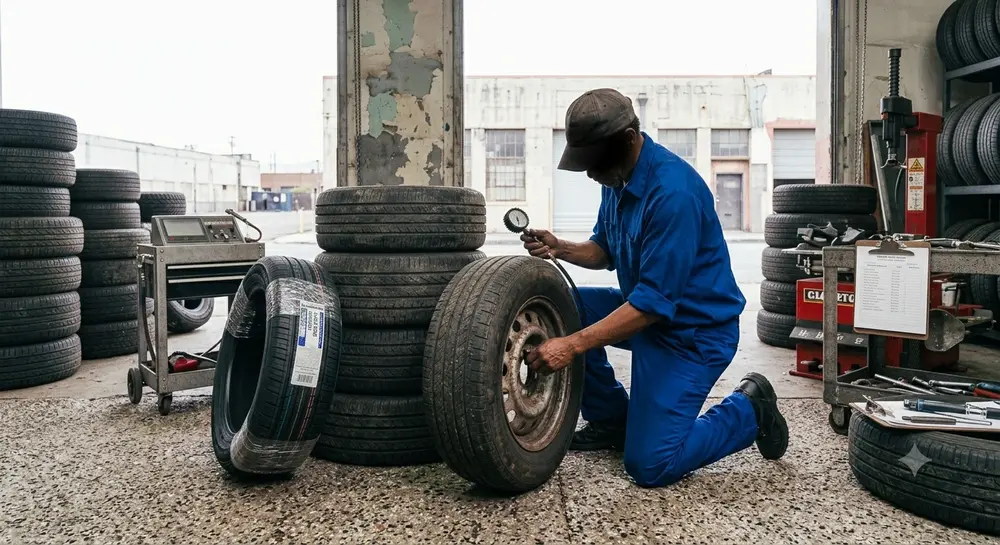
If you’re shopping for used tires in Plano and worried about ending up with something unsafe, worn out, or older than it looks, you’re asking exactly the right questions. A good used tire can save you real money and get you back on the road quickly, but a bad one can cost you a blowout on the Dallas North Tollway. The difference comes down to knowing how to inspect a tire before you buy it and where you buy it from. This guide walks you through the whole process the way we’d walk a neighbor through it here at the shop.
Why Buy Used Tires in Plano?
Used tires aren’t just for tight budgets. There are smart, practical reasons drivers all over North Texas choose them, and understanding those reasons helps you shop with the right expectations.
- Real cost savings. A quality used tire typically costs 30-50% less than a comparable new one. For a driver who needs four tires at once, that difference adds up fast.
- Matching a single replacement. If you damage one tire, and the other three still have plenty of life, you often can’t buy a single new tire that matches your existing tread depth. A used tire with similar wear keeps your set balanced, which protects your alignment, drivetrain, and handling.
- Getting a discontinued size or model. Older vehicles and certain trims run tire sizes that are hard to find new. The used market is often where you’ll find the exact fit.
- Value on a vehicle you’re about to sell or trade. No reason to put four brand-new tires on a car that’s leaving your driveway in a few months.
How to Inspect a Used Tire Before You Buy
This is the heart of buying used, and it’s where most people go wrong. Never buy a used tire you haven’t inspected, or that a trustworthy shop hasn’t inspected for you. Here’s the exact checklist we use.
1. Check the Tread Depth (Aim for 4/32″ or More)
New tires start at roughly 10/32″ to 12/32″ of tread. Legally a tire is “worn out” at 2/32″, but you never want to buy one that close to the end. Look for a used tire with at least 4/32″ of remaining tread so you get meaningful life out of it.
- The penny test: Insert a penny into the tread groove with Lincoln’s head upside down and facing you. If you can see the top of his head, the tire is at or below 2/32″ and should be rejected.
- The quarter test: Use a quarter the same way. If the tread reaches Washington’s head, you have about 4/32″ or more, which is your buying target.
- Check the depth in several spots across the tire, not just one groove.
2. Read the DOT Date Code (Under 6 Years Old)
Tires age even when they aren’t driven. Rubber dries out, and that matters even more in the Texas heat. On the sidewall, find the DOT code ending in a four-digit number, for example “2519” means the 25th week of 2019. A tire more than six years old should generally be avoided regardless of how much tread it has left, and most manufacturers say ten years is the absolute limit. Tread depth tells you nothing about age, so always check both.
3. Confirm Even Wear
Wear patterns tell a story about the tire’s past life. You want tread that has worn down evenly all the way across.
- Wear on one edge only points to an alignment problem on the previous vehicle.
- Wear in the center suggests it was chronically overinflated.
- Wear on both edges suggests it was run underinflated.
- Cupping or scalloping (a wavy, dipped pattern) can mean worn suspension and often causes noise and vibration.
4. Inspect the Sidewalls for Damage
The sidewall is where a used tire can hide its worst secrets. Run your hand around both inner and outer sidewalls and reject any tire showing:
- Cracks or “dry rot” – fine spiderweb cracking in the rubber, a common sign of age and heat exposure.
- Bulges or bubbles – these indicate internal structural damage and can fail without warning.
- Plugs or patches on the sidewall – sidewalls are never safely repairable. A patch there is a hard no.
- Exposed cords or belts – if you can see the internal fabric or steel, walk away.
What to Avoid When Buying Used Tires
A few red flags should end the conversation immediately, no matter how good the price sounds:
- Any tire below 4/32″ of tread being sold as “plenty of life left.”
- Tires older than six years by the DOT code, especially ones stored outdoors in the sun.
- Sidewall repairs, bulges, or visible cracking.
- A seller who won’t let you inspect the tire, can’t tell you its age, or refuses to mount and balance it properly.
- Mismatched tires across an axle – the two tires on the same axle should match in size, type, and be close in tread depth.
Used vs. New Tires: How to Decide
Used isn’t always the answer, and being honest about that is part of doing right by you.
- Lean used when you need to match existing tread, you’re on a tight budget, the car is short-term, or you need a hard-to-find size. Explore our inspected used tire inventory for these situations.
- Lean new when you’re replacing all four, keeping the vehicle for years, or you want the full warranty and maximum tread life. Our new tire selection covers those cases.
The right call depends on your vehicle, your miles, and your budget, which is exactly the kind of thing worth a two-minute conversation with a tech before you spend a dollar.
How Much Do Used Tires Cost Compared to New?
Pricing varies by size, brand, and remaining tread, but the general rule holds: a quality used tire usually runs 30-50% less than the equivalent new tire. A lightly used tire with 7/32″-8/32″ of tread will cost more than one at 4/32″, and that’s fair, because you’re paying for the miles you’ll actually get. The smartest way to compare isn’t sticker price alone, it’s cost per remaining 1/32″ of tread. A cheap tire with barely any tread left is rarely the real bargain.
How Long Will a Used Tire Last?
The honest answer is: it depends on where it starts. A used tire bought at 6/32″ has roughly half the wear-life of a new tire ahead of it, assuming similar driving. What matters most for planning is that you buy at 4/32″ or more and match the tire to how long you’ll keep the vehicle. (If you want the full breakdown of lifespan and mileage expectations, that’s a topic all its own – here we’re focused on buying and inspecting the right tire in the first place.)
Why Buying From an Inspecting Shop Beats a Random Seller
You can find used tires on marketplace listings and in random lots, but there’s a real difference between a tire someone is flipping out of a garage and one a shop has professionally inspected. Here’s why that matters, especially in North Texas.
- Texas heat is hard on rubber. Our long, hot summers accelerate dry rot and aging. A tire that sat in a Plano backyard for years can look fine and still be unsafe. A shop reads the DOT date and checks for heat damage every time.
- Professional inspection catches what you can’t see. Internal separation, prior sidewall repairs, and hidden bulges are easy to miss in a parking-lot handoff.
- Accountability and matching. A reputable shop stands behind what it sells and helps you match tires correctly across your axles.
At Mike’s Tires Plano, every used tire in our inventory is inspected for tread depth, age, wear pattern, and sidewall integrity before it ever goes on a customer’s vehicle. That’s the whole point of buying used from people who do this all day instead of gambling on a stranger.
Getting Your Used Tires Mounted and Balanced
Buying the tire is only half the job. Proper installation is what makes it safe and comfortable to drive on.
- Mounting seats the tire on the wheel and sets it to the correct air pressure for your vehicle.
- Balancing adds small weights so the tire and wheel spin evenly. Skip this and you’ll feel vibration, wear the tire unevenly, and stress your suspension.
- A new valve stem is cheap insurance and worth doing at install.
- It’s also the perfect time to knock out your Texas state inspection if you’re due, since good tires are part of passing anyway.
An improperly mounted or unbalanced used tire will underperform even if it was a great tire to begin with, so this step is not the place to cut corners.
Frequently Asked Questions
Are used tires safe to buy?
Yes, as long as they’re properly inspected. A used tire with at least 4/32″ of tread, a DOT date under six years old, even wear, and clean sidewalls is safe. The risk comes from buying unseen or from sellers who don’t check age and condition, which is why buying from an inspecting shop matters.
How old is too old for a used tire?
Generally, avoid any tire more than six years old based on its DOT date code, and never go past ten years regardless of tread. In the Texas heat, aging speeds up, so the date code is just as important as the tread depth when you shop.
Can I mix used and new tires?
You can, but the two tires on the same axle should match in size and type and be close in tread depth. For all-wheel-drive vehicles, matching all four closely is especially important to protect the drivetrain. When in doubt, ask a tech before mixing.
How much can I save buying used tires in Plano?
Most drivers save roughly 30-50% versus comparable new tires. The exact savings depend on size, brand, and remaining tread. Comparing cost per remaining 1/32″ of tread is the best way to make sure a low price is actually a good value.
Ready to Shop Smart?
Whether you need one tire to match your set or a full set of quality used tires, the team at Mike’s Tires Plano inspects every tire so you don’t have to gamble on age or hidden damage. Contact us and we’ll help you find the right fit, then mount and balance it right the first time.