
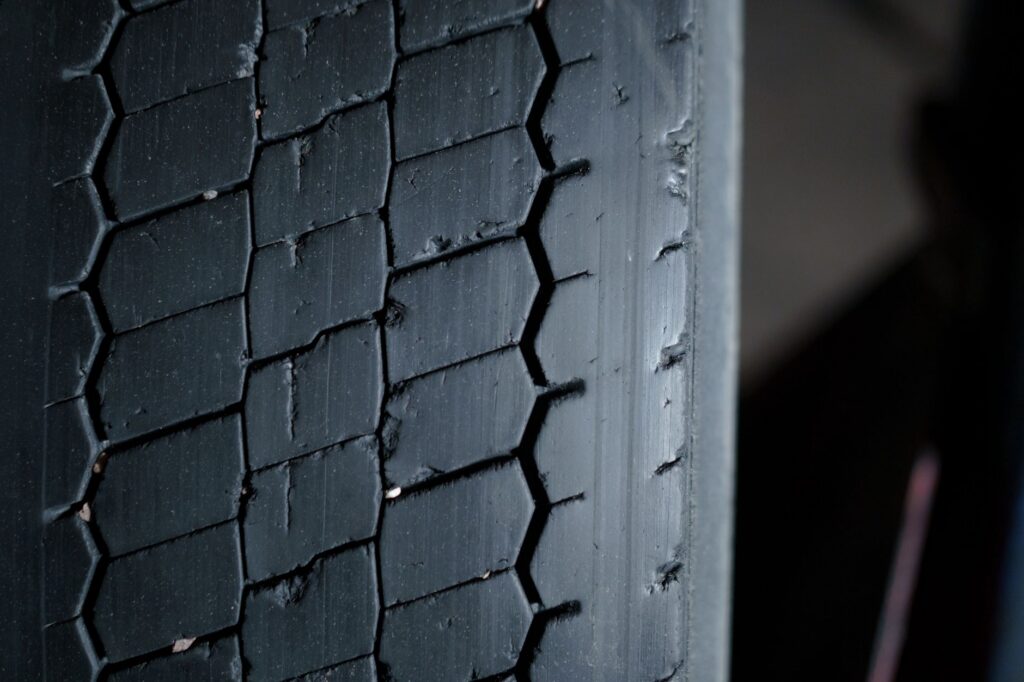
Knowing how to check tire tread helps you identify worn tires before they compromise traction, braking, and control. You can perform a quick check at home with a penny, a quarter, or a tire tread depth gauge. These methods help you spot tires that have reached the minimum tread depth or are wearing unevenly.
For drivers in Plano, TX, regular tread checks are especially important because heavy North Texas rain can make worn tires more difficult to control. The penny test is a convenient screening method, while a tread depth gauge provides a more precise measurement. If you notice low tread, uneven wear, cracks, or other damage, have your tires inspected before continuing to drive on them.
Why Tire Tread Depth Matters
Tire tread is designed to help your tires maintain contact with the road, channel water away from the contact area, and provide traction during acceleration, cornering, and braking. As the tread wears down, your tires can become less effective in wet conditions.
Here are three important reasons to monitor tire tread depth.
1. Better Wet-Weather Traction
Tread grooves help move water away from the tire’s contact patch. When those grooves become shallow, the tire has less capacity to channel water, increasing the risk of hydroplaning.
Drivers in Plano, Frisco, and McKinney can encounter sudden downpours, making adequate tread depth particularly important for wet-weather driving.
2. More Reliable Braking
Worn tires can require longer stopping distances on wet pavement. A tire with adequate tread generally has a better ability to maintain traction in rain than a similarly designed tire with very shallow tread.
Although 2/32 inch is a commonly recognized minimum tread-depth threshold, 4/32 inch is a useful point to reassess your tires, especially if you frequently drive in heavy rain.
3. Improved Vehicle Control
Tire tread also contributes to handling and directional stability. Excessively worn or unevenly worn tires can make it harder to maintain control, particularly during sudden maneuvers or on slippery roads.
Regularly inspecting your tires is an important part of routine maintenance. You can also follow these tire maintenance tips for Texas heat to help protect your tires from premature wear.
How to Check Tire Tread With the Penny Test
The penny test is a simple way to screen your tires for low tread depth. You only need a penny and a few minutes to check each tire.
Follow these steps:
- Park your vehicle on a level surface, engage the parking brake, and make sure the vehicle is safely stationary.
- Take a penny and hold it with Abraham Lincoln’s head upside down, pointing toward the tire.
- Insert the penny into a main tread groove.
- Look at how much of Lincoln’s head is covered by the surrounding tread.
- Repeat the test in several grooves across each tire, including areas near the inner and outer edges.
If the tread covers part of Lincoln’s head, the tire may have more than 2/32 inch of tread remaining at that spot. If you can see the top of his head, the tread may be at or below approximately 2/32 inch.
Important: The penny test is only a screening method. It does not provide an exact measurement, and tread can vary across the same tire. If the penny test suggests that your tires are worn, use a tread depth gauge or have a tire professional measure them.
Do not wait for the penny test to indicate dangerously low tread before considering replacement. Wet-weather performance can become a concern well before the tire reaches 2/32 inch.
How to Check Tire Tread With the Quarter Test
The quarter test offers an additional visual check that can help you identify tires approaching a lower tread depth.
To perform the test:
- Hold a U.S. quarter with George Washington’s head upside down.
- Insert the coin into a main tread groove.
- Check whether the tread reaches the top of Washington’s head.
- Repeat the process in several grooves across each tire.
If the tread reaches the top of Washington’s head, the tire has approximately 4/32 inch of tread remaining.
This depth is a useful warning point for drivers who frequently encounter wet roads. Consider having your tires measured and discussing replacement options if the tread is approaching this level.
The quarter test is not a substitute for a gauge, and coin-test results can be affected by groove shape and placement. Use it as an early warning rather than an exact measurement.
How to Read Tire Tread Wear Bars
Most passenger-car tires have built-in tread wear indicator bars. These small raised sections of rubber run across the main tread grooves and become easier to see as the tread wears down.
To inspect them:
- Look into the main grooves around the tire.
- Find the small raised bars positioned across the grooves.
- Compare the height of the surrounding tread with the bars.
- Check several locations because wear may not be uniform.
When the surrounding tread becomes level with the wear bars, the tire has reached approximately 2/32 inch of tread depth. At that point, replacement is necessary.
Wear bars are useful for identifying tires that have reached the minimum tread-depth threshold, but they do not tell you when a tire has started losing wet-weather performance. A tire can require attention well before the tread becomes level with the bars.
If the bars are nearly flush with the tread, arrange a professional inspection and replacement as appropriate.
How to Measure Tire Tread With a Depth Gauge
A tread depth gauge provides a more precise measurement than a coin test. These tools are generally inexpensive and commonly display tread depth in 32nds of an inch.
To use a gauge:
- Park the vehicle safely on a level surface.
- Position the gauge’s base flat against the tread surface.
- Place the measuring probe into a main tread groove.
- Press the probe down until it reaches the bottom of the groove.
- Read the measurement displayed on the gauge.
- Repeat across the inner, center, and outer tread areas and at several points around the tire.
Avoid measuring only one spot. A tire may have sufficient tread in the center but be dangerously worn along one edge.
What Do Tire Tread Depth Measurements Mean?
Use the following guide to understand common tread-depth readings.
| Tread depth | What it means |
|---|---|
| Around 10/32 to 11/32 inch | Common new-tire tread depth, although some tire models start deeper or shallower. |
| Around 6/32 inch | More tread remains, but continue monitoring wear and tire condition. |
| Around 4/32 inch | A useful point to reassess wet-weather performance and plan for replacement if needed. |
| Around 2/32 inch | Common minimum tread-depth threshold. Replacement is necessary. |
These readings are general guidelines, not a guarantee that a tire is safe. Tire design, damage, age, operating conditions, and manufacturer recommendations also matter.
If you are unsure how to interpret your measurements, visit Mike’s Tires in Plano for assistance checking your tires.
Why You Should Check Multiple Areas of Each Tire
Checking just one spot can give you a misleading impression of your tire’s condition. Tires can wear unevenly because of incorrect inflation pressure, alignment issues, worn suspension components, or other mechanical problems.
Measure at least three areas across the tread: the inner edge, center, and outer edge. Also take readings at multiple points around the tire’s circumference.
For example, a tire measuring 6/32 inch in the center but only 2/32 inch along the inner edge has a significant wear problem. The deeper center tread does not make the worn edge safe.
Check all four tires, including the inside edges that may be difficult to see without turning the wheels or having the vehicle inspected. If you notice uneven wear, have the cause investigated rather than simply replacing the tire.
What Uneven Tire Wear Patterns Can Tell You
Tread wear patterns can provide clues about tire pressure, alignment, and suspension condition.
Both Edges Are Worn
When both shoulders of a tire wear faster than the center, underinflation may be a contributing factor. Check the pressure against the vehicle manufacturer’s recommended cold tire pressure.
The Center Is Worn
Excessive wear in the center can be associated with overinflation. Check the recommended pressure before making adjustments.
Only One Edge Is Worn
Excessive wear along the inner or outer edge can indicate an alignment problem or suspension issue. A professional inspection can help identify the underlying cause.
The Tread Has Scalloped or Cupped Areas
Repeated dips or uneven patches around the tire may indicate worn suspension components, wheel imbalance, or other mechanical problems.
The Tread Has Feathered Edges
If the tread blocks feel smooth in one direction and sharp in the other, incorrect toe alignment may be contributing to the wear.
These patterns are clues, not definitive diagnoses. Multiple problems can produce similar symptoms, so have the tires and relevant vehicle components inspected.
Replacing worn tires without addressing the cause may lead to premature wear on the replacement set. Maintaining the correct tire pressure and addressing alignment or suspension problems can help extend tire life.
When Should You Replace Tires Instead of Rotating Them?
Tire rotation and tire replacement serve different purposes. Rotation changes the position of tires on the vehicle to help distribute wear more evenly. It cannot restore tread that has already worn away.
When Tire Rotation May Help
Rotation may be appropriate when the tires have adequate tread remaining but are wearing unevenly between the front and rear axles.
Follow your vehicle and tire manufacturers’ rotation recommendations. The correct pattern and interval depend on factors such as drivetrain, tire type, and whether the tires are directional or different sizes.
Rotation will not correct every uneven-wear problem. If you notice one-sided wear, cupping, or other unusual patterns, have the cause investigated.
When Tire Replacement Is Necessary
Have your tires inspected and consider replacement when:
- Tread approaches 4/32 inch and wet-weather performance is a concern.
- Tread reaches approximately 2/32 inch.
- The wear bars are level with the surrounding tread.
- The tire has a bulge, exposed cords, or significant structural damage.
- Cracks or other deterioration indicate that the tire may no longer be safe.
- The tire manufacturer recommends replacement based on age or condition.
A tire with a bulge, exposed cords, or suspected structural damage should not be treated as safe simply because its tread is deep. Stop driving on a visibly damaged tire when it is unsafe to do so, and arrange professional assistance.
Tire age also matters. Rubber can deteriorate even when substantial tread remains. Check the manufacturer’s age-related inspection and replacement guidance rather than relying on one universal age limit.
If you need replacements, explore new tires at Mike’s Tires or review available used tires. Used tires should be inspected carefully for adequate tread, uneven wear, damage, repairs, and age before purchase.
How Often Should You Check Tire Tread?
Checking your tire tread about once a month is a useful maintenance habit. You should also inspect your tires before long road trips and after noticing changes in handling, vibration, or tire pressure.
A regular inspection should include:
- Measuring tread depth across multiple areas of each tire.
- Looking for cracks, bulges, punctures, and other visible damage.
- Checking for uneven wear.
- Confirming that tire pressure matches the vehicle manufacturer’s recommendation.
- Inspecting the tires for signs of aging or deterioration.
You can make tire checks part of your broader maintenance routine by learning how to check tire pressure. Proper pressure helps support even tread wear, although it does not eliminate the need to monitor tread depth.
Frequently Asked Questions About Checking Tire Tread
How do I know if my tire tread is too low?
Use a tread depth gauge for a precise reading, or perform the penny test as a quick screening method. If the tread is approaching 4/32 inch, reassess wet-weather performance and plan accordingly. At approximately 2/32 inch, the tire has reached a commonly recognized minimum tread-depth threshold and needs replacement.
Is the penny test accurate?
The penny test is useful for identifying potentially worn tires, but it does not measure tread depth precisely. Coin placement and tread design can affect the result. A tread depth gauge provides a more reliable numerical measurement.
Is the quarter test better than the penny test?
The tests serve different purposes. The penny test screens for tread near 2/32 inch, while the quarter test provides an earlier warning around 4/32 inch. Neither replaces a tread depth gauge or professional inspection.
How much tread is recommended for driving in the rain?
Around 4/32 inch is a useful point to reassess tire condition and wet-weather performance. The appropriate decision depends on the tire, road conditions, and manufacturer guidance. Do not wait until the tread reaches 2/32 inch if wet-weather traction is already a concern.
Can I drive with uneven tire tread?
Uneven wear can indicate an underlying issue and may reduce traction or handling. If a tire has a severely worn section, exposed cords, a bulge, or other structural damage, do not continue driving on it. Have the tire and any related alignment or suspension problems inspected.
Does tire rotation fix worn tread?
No. Rotation can help distribute future wear more evenly, but it cannot restore lost tread or make a tire with structural damage safe. Tires that have reached their replacement threshold need to be replaced.
Can I check tire tread without removing the tire?
Yes. You can inspect visible tread grooves and use a coin or depth gauge while the tire is mounted. Check multiple locations, including the inner and outer edges where accessible. If you cannot inspect an area safely, ask a tire professional to check it.
Keep Your Tires Safe With a Tread Check at Mike’s Tires Plano
Checking tire tread regularly helps you identify wear before it becomes a bigger safety concern. Use the penny test for a quick screening, the quarter test for an earlier warning, and a tread depth gauge for more precise measurements.
If you have ever run your thumb across a worn tire and wondered whether it will get you through another North Texas rainstorm, learning how to check tire tread is one of the simplest and most important car-care skills you can pick up. Your tires are the only four points of contact between your vehicle and the road, and as the tread wears down, grip, wet-weather braking, and hydroplaning resistance all fade — often long before you notice a difference in the driver’s seat. The good news is that you do not need a shop or a scanner to get a solid read on your tread. A penny, a quarter, and two minutes in your driveway will tell you most of what you need to know, and the folks at Mike’s Tires in Plano can confirm it for free anytime you want a second opinion.
Why Tire Tread Depth Actually Matters
Tread is not just decoration — those grooves are engineered to channel water out from under your tire so the rubber can stay in contact with the pavement. As tread wears down, three things get measurably worse:
- Grip and cornering: Shallow tread means less rubber biting into the road, longer stopping distances, and a twitchier feel in turns.
- Wet braking: Industry research, including Bridgestone’s tire tread depth guide, consistently shows that stopping distance on wet roads grows dramatically once tread drops below 4/32″. A tire that stops fine when new can add many extra feet of braking distance when worn.
- Hydroplaning: When grooves can no longer evacuate water fast enough, the tire rides up on a film of water and you lose steering and braking control entirely. Around Plano, Frisco, and McKinney, our sudden spring and summer downpours make this a real, seasonal risk.
Bald tires are also more prone to blowouts on hot Texas asphalt, where surface temperatures can soar in July and August. Checking tread regularly is cheap insurance against an expensive, dangerous surprise.
How to Check Tire Tread with the Penny Test and the Quarter Test
The classic at-home method costs one cent. Here is the step-by-step:
The Penny Test (Lincoln’s Head)
- Grab a penny and hold it so Lincoln’s head is upside down and facing you.
- Insert the penny into a tread groove so Lincoln’s head points down into the tire.
- If part of his head is always covered by the tread, you have more than 2/32″ left. If you can see the very top of his head, your tread is at or below 2/32″ — the point at which a tire is worn out and, in Texas, legally due for replacement.
The Quarter Test (a Smarter Early Warning)
The penny test only tells you when you have already hit the legal minimum — which is really too late for safe driving. The quarter test gives you an earlier heads-up:
- Insert a quarter with Washington’s head upside down into the groove.
- If the tread touches the top of Washington’s head, you have about 4/32″ remaining. That is the smart point to start shopping for replacements — before wet-weather performance really drops off.
Use the penny to know when a tire is unsafe and the quarter to know when it is time to plan ahead. If either coin tells you the tread is getting thin, it is worth having it measured properly.
Reading the Built-In Tread Wear Bars
Every modern tire has its own worn-out indicator built right in. Look into the grooves and you will see small raised rubber bridges running across the tread, called tread wear indicator bars. When new, they sit well below the tread surface. As the tire wears:
- The tread blocks gradually shrink down toward those bars.
- When the surrounding tread is flush (level) with the wear bars, the tire has reached 2/32″ and needs to be replaced.
- If you see the bars appearing as smooth strips across the tire, that is the tire telling you its life is over.
Wear bars are a great quick visual check, but because they only signal the 2/32″ limit, pair them with a coin or gauge for earlier warning.
Using a Tread Depth Gauge (Measured in 32nds of an Inch)
For an exact number, a tread depth gauge is the tool professionals use — and they cost only a few dollars at any auto parts store. Most read in 32nds of an inch, the standard unit for U.S. tire tread.
- Place the base of the gauge flat against the tread block and press the probe down to the bottom of a groove.
- Read the number where the tread surface lines up on the scale.
- Take readings in the inner, center, and outer grooves so you capture the full picture.
What the Numbers Mean
- ~10/32″ – 11/32″: A brand-new tire (some all-terrain and truck tires start deeper).
- 6/32″: Roughly half worn — still safe, but start keeping an eye on it.
- 4/32″: The recommended replacement point, especially if you regularly drive in rain. Wet traction drops noticeably below this depth.
- 2/32″: The Texas legal minimum. At this depth a tire is unsafe and can fail a state inspection. Do not keep driving on it.
Not sure how to read your gauge? Bring the car by Mike’s Tires Plano and we will measure all four for free and walk you through the numbers.
Check Multiple Spots for Uneven Wear
Here is the mistake most people make: they check one spot and assume the whole tire matches. Tires rarely wear evenly. Always measure in at least three places across each tire — inside edge, center, and outside edge — and at a couple of points around the circumference. A tire that reads 6/32″ in the center but 2/32″ on one edge is still a tire that needs to come off the car.
What Uneven Wear Patterns Are Telling You
- Both edges worn, center fine: Chronic under-inflation — the tire is running on its shoulders.
- Center worn, edges fine: Over-inflation — too much air crowns the tread.
- One edge only worn (inner or outer): An alignment problem — camber or toe is off.
- Scalloped or “cupped” dips around the tire: Worn suspension components like shocks or struts, or an out-of-balance tire.
- Feathered edges (smooth one way, sharp the other): Usually a toe-alignment issue.
Uneven wear is a symptom, not just a tire problem. Replacing the rubber without fixing the underlying cause just burns through your next set too. A quick alignment and pressure check — easy to fold into a Texas state inspection visit — protects your investment.
When to Replace vs. When to Rotate
Not every worn tire needs to be thrown out. Here is how to tell the difference:
- Rotate when tread is still healthy (above 4/32″) but wearing unevenly front-to-back — typically every 5,000 to 7,500 miles. Front tires on most cars wear faster, so rotating evens things out and extends the life of the whole set.
- Replace when any tire hits 4/32″ (recommended) or 2/32″ (legal limit), when wear bars are flush, when you see cracking, bulges, or cords, or when uneven wear has ruined one section beyond saving. Also replace tires older than about six years regardless of tread — rubber ages even with plenty of tread left.
When you do need new rubber, we carry a full range of quality new tires, plus inspected, budget-friendly used tires for drivers who want a safe set without the new-tire price. Either way, we will match the right tire to your vehicle and your driving.
Frequently Asked Questions
How often should I check my tire tread?
Once a month is a good habit, plus before any long road trip. It takes two minutes with a penny, and catching thin or uneven tread early can save you from a blowout or a failed inspection. If you would rather not do it yourself, stop by Mike’s Tires Plano for a free tread check anytime.
What is the legal tire tread limit in Texas?
In Texas, a tire is considered legally worn out at 2/32″ of tread depth, and it can cause you to fail a state inspection. For safety, though, most experts — and our technicians — recommend replacing at 4/32″, especially given how quickly our roads flood during heavy rain.
Is the penny test or the quarter test more accurate?
They measure different thresholds. The penny test flags the 2/32″ legal minimum (time to replace now), while the quarter test flags 4/32″ (time to start planning). A dedicated tread depth gauge, read in 32nds of an inch, gives the most precise number. Using all three together is ideal.
Why is only one edge of my tire worn down?
Wear on just the inner or outer edge almost always points to an alignment issue. Left alone, it will keep chewing up that side of the tire. Have your alignment and tire pressure checked, and we can inspect the suspension to find the root cause before you buy your next set.
Checking your tread at home is smart — but if a coin or gauge tells you the numbers are getting low, do not gamble on it. The team at Mike’s Tires in Plano will measure all four tires for free, explain exactly where you stand, and help you decide whether it is time to rotate, align, or replace. Contact Mike’s Tires Plano or swing by the shop today and drive away with confidence on every North Texas road.
If your tires show low tread, uneven wear, or visible damage, have them inspected before deciding whether rotation or replacement is appropriate. Contact Mike’s Tires Plano for help assessing your tires and finding suitable replacements for your vehicle and driving needs.