
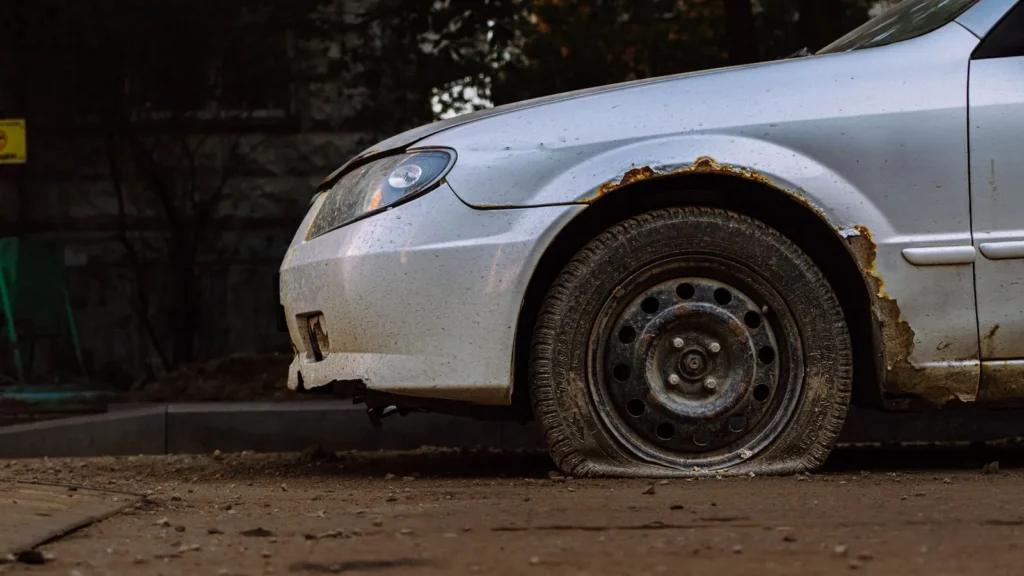
You should drive as little as possible on a flat tire—ideally, not at all. If your tire suddenly loses air, slow down gradually, pull over to a safe location, and stop. Driving even a short distance on a completely flat tire can damage the tire beyond repair, bend the wheel, and make your vehicle harder to control.
If you have a tire that is losing pressure but still partially inflated, the safest distance depends on the severity of the leak, the road conditions, and your vehicle. However, continuing to drive is risky, and roadside assistance or a spare tire is generally the better option.
Understanding what happens when you drive on a flat tire can help you make the right decision, minimize repair costs, and avoid unnecessary danger.
Can You Drive on a Flat Tire?
In most situations, you should not drive on a flat tire. Regular tires rely on air pressure to support the vehicle's weight, maintain their shape, and provide proper contact with the road.
When a tire loses its pressure, its sidewalls can become compressed between the wheel and the road surface. This creates excessive friction and heat, which can quickly damage the tire's internal structure.
Even if your vehicle can still move, that does not mean the tire is safe to drive on.
There are some important distinctions to understand:
- Completely flat tire: Do not continue driving. Stop somewhere safe and arrange assistance.
- Partially deflated tire: Pull over as soon as it is safe. Low pressure can still cause overheating, poor handling, and tire damage.
- Slow leak: If the tire is losing air, avoid continuing your trip until the cause has been assessed and the tire is safely inflated or repaired.
- Run-flat tire: Some vehicles have tires designed to travel a limited distance after losing pressure, but you must follow the tire manufacturer's specific restrictions.
If you are unsure about the tire's condition, treat the situation as unsafe until it has been checked.
How Far Can You Drive on a Flat Tire Before It Gets Damaged?
There is no guaranteed safe distance for driving on a flat tire. Damage can begin almost immediately after the tire loses its ability to support the vehicle properly.
A tire driven while completely deflated may suffer internal structural damage within a very short distance. Continuing for even a fraction of a mile can make a repairable puncture impossible to fix.
The outcome depends on several factors, including the following.
1. How Much Air Remains in the Tire
A tire that has lost some pressure is different from one that has collapsed completely. However, both conditions can be dangerous.
When pressure drops below the recommended level, the tire flexes more than intended. This creates additional heat and stress, particularly around the sidewalls.
If the tire is completely flat, the wheel may begin carrying weight in a way the tire was not designed to handle. This can damage the tire's internal components and the wheel itself.
Do not assume you can safely drive a few blocks simply because the tire still looks partially inflated.
2. Your Driving Speed
Higher speeds can increase heat buildup and worsen tire damage. They can also make it more difficult to maintain control when a tire suddenly loses pressure.
If you experience a flat while moving, avoid hard braking or sudden steering movements. Gradually reduce speed, keep a firm grip on the steering wheel, and move to a safe stopping location.
Once you have stopped, do not resume driving on a completely flat tire just to reach a nearby tire shop.
3. The Weight of Your Vehicle
Heavier vehicles place more load on their tires. An SUV, pickup truck, or heavily loaded vehicle can put substantial pressure on a deflated tire and wheel.
Additional passengers or cargo can increase that load further.
The greater the load, the more important it is to avoid moving the vehicle on a flat tire. If your vehicle cannot be moved safely, request roadside assistance or towing.
4. Road Conditions
Rough pavement, potholes, debris, and uneven surfaces can increase the risk of wheel damage when a tire is flat.
Even a short distance on a rough road may damage the rim or suspension components. Wet roads and heavy traffic can also make an emergency stop more challenging.
Choose a safe stopping place rather than attempting to reach your destination.
What Happens If You Keep Driving on a Flat Tire?
Continuing to drive on a flat tire can turn a relatively straightforward tire repair into a much more expensive problem.
Here are the main risks.
The Tire Can Become Irreparable
A puncture in the tread area may sometimes be repaired if the tire meets the applicable repair requirements.
However, driving on a flat can crush the internal structure, damage the sidewall, and create heat-related deterioration that is not always visible from the outside.
A tire that might have been repairable before being driven while deflated may need to be replaced afterward.
For more information about replacement decisions, read our guide on how to tell if you need new tires.
The Wheel Can Be Damaged
When a tire loses its air pressure, it can no longer cushion the wheel properly against the road.
The metal wheel may strike pavement, potholes, or other obstacles directly. Depending on the circumstances, this can cause bending, cracks, or other damage.
A damaged wheel may not hold air correctly, even after a replacement tire is installed.
If you notice a bent rim, vibration, or visible wheel damage, professional inspection may be necessary. Learn more about wheel repair in Plano and the warning signs of wheel damage.
You Can Lose Control of Your Vehicle
A flat tire changes how your vehicle responds to steering and braking. The vehicle may pull toward one side, feel unstable, or respond unpredictably when you attempt to turn.
A sudden tire failure at higher speeds can be particularly dangerous because you may have less time and space to react.
This is why it is important to slow down gradually and avoid abrupt movements when you first notice a flat.
Other Vehicle Components May Be Affected
Depending on how far you drive and how severe the damage becomes, continued driving can affect components near the wheel, including suspension parts and wheel-related hardware.
A severely damaged wheel can also complicate the removal and installation of a replacement tire.
Stopping early helps reduce the chance of turning a tire problem into a larger repair.
What Should You Do If You Get a Flat Tire While Driving?
Knowing what to do when a tire goes flat can help you stay calm and reduce the risk of an accident.
Step 1: Stay Calm and Maintain Control
If you notice a sudden loss of tire pressure, hold the steering wheel firmly and avoid abrupt steering or braking.
Gradually reduce your speed and look for a safe place to stop. If the vehicle begins pulling to one side, make small, controlled steering corrections.
Do not accelerate to reach a tire shop before the tire deteriorates further.
Step 2: Pull Over to a Safe Location
Move away from moving traffic whenever possible. A wide shoulder, parking lot, or nearby safe stopping area may be suitable, depending on the road and traffic conditions.
Avoid stopping around blind curves, narrow shoulders, or other locations where passing vehicles may pose a danger.
If you cannot safely reach a suitable location, prioritize your safety and contact roadside assistance.
Step 3: Assess the Situation Without Taking Unnecessary Risks
Once stopped, check whether the tire is visibly flat or damaged. Do not stand in an active traffic lane or put yourself in danger to inspect the wheel.
If you are on a busy highway, staying in a safe location and requesting professional assistance may be preferable to changing the tire yourself.
Step 4: Use a Suitable Spare Tire or Request Assistance
If you have a serviceable spare tire and can change it safely, follow your vehicle manufacturer's instructions.
A compact spare is a temporary solution with specific speed and distance restrictions. Read our guide on how far you can drive on a spare tire before relying on one for continued travel.
If you do not have a spare, cannot change it safely, or suspect wheel damage, arrange roadside assistance or towing.
Step 5: Have the Damaged Tire Inspected
Once the vehicle is in a safe location, have the tire inspected to determine whether it can be repaired or must be replaced.
A puncture may be repairable if it is within the permitted tread area and the tire has not suffered internal damage. Sidewall damage, severe wear, and damage caused by driving while flat may require replacement.
Can You Drive a Short Distance on a Flat Tire to Reach a Tire Shop?
Driving a short distance on a completely flat tire is not recommended, even if the tire shop is only a few minutes away.
The risk is that the tire and wheel can sustain additional damage before you arrive. A short trip may cost more than calling for assistance, especially if the wheel becomes damaged or the tire can no longer be repaired.
If the tire has only lost some pressure, the situation may be less severe, but you should still stop safely and assess the problem rather than continuing your trip.
If you are already at a safe location, arrange help rather than driving on a flat tire.
What If You Are Blocking Traffic?
Safety comes first. If your vehicle is in a dangerous position, follow local emergency guidance and move only as necessary to escape immediate danger, if the vehicle can be controlled.
Do not treat this as permission to drive to a shop on a flat tire. Once you are out of immediate danger, stop and request assistance.
Can You Drive on a Flat Run-Flat Tire?
Some vehicles are equipped with run-flat tires that are designed to support a limited amount of driving after a loss of pressure.
Unlike standard tires, run-flat tires have reinforced construction that can help support the vehicle temporarily without normal inflation pressure.
However, they still have limitations.
Depending on the specific tire and vehicle, the manufacturer may specify a maximum distance of around 50 miles and a maximum speed of around 50 mph after a loss of pressure. These figures are common guidelines for some run-flat tires, not universal limits.
Actual restrictions depend on the tire model, the severity of the damage, the vehicle load, and the manufacturer's instructions.
Before continuing on a run-flat tire:
- Check the vehicle owner's manual for the applicable restrictions.
- Follow any warnings displayed by the tire-pressure monitoring system.
- Reduce speed and avoid aggressive driving.
- Stop if the vehicle becomes unstable or the tire shows signs of further damage.
- Arrange an inspection as soon as possible.
If you are unsure whether your vehicle has run-flat tires, do not assume you can continue driving. Confirm the tire type and follow the appropriate guidance.
Can a Flat Tire Be Repaired Instead of Replaced?
Sometimes, yes. Whether a flat tire can be repaired depends on the location and size of the puncture, the tire's condition, and whether it has sustained internal damage.
When a Tire May Be Repairable
A tire professional may be able to repair a small puncture in the tread area if the tire meets applicable industry repair standards.
The tire generally needs to have adequate remaining tread and no disqualifying structural damage. A proper inspection may require removing the tire from the wheel to examine the inside.
Simply plugging a hole from the outside without checking for internal damage may not provide a safe, lasting repair.
When a Tire Needs Replacement
Replacement is generally necessary when the tire has serious sidewall damage, exposed cords, significant structural deterioration, or damage from being driven while flat.
A tire with excessive wear or an unsuitable previous repair may also need replacement.
If replacement is necessary, compare suitable options through Mike's Tires Plano's new tire service or explore used tires if you need a more budget-conscious option.
Any replacement tire should meet your vehicle's size, load, and other specifications.
How Can You Prevent Flat Tires?
Although not every flat tire can be prevented, regular maintenance can help reduce the risk of unexpected tire problems.
Check Tire Pressure Regularly
Use a reliable pressure gauge to check your tires when they are cold. Compare the reading with the recommended pressure listed on your vehicle's tire information label or in the owner's manual.
Do not use the maximum pressure printed on the tire sidewall as a substitute for the vehicle manufacturer's recommended pressure.
Learn more in our guide on how to check tire pressure.
Inspect Tread and Sidewalls
Look for embedded objects, cuts, cracks, bulges, and uneven wear. If you discover a nail or screw, avoid removing it before a professional can assess the damage, because doing so may allow the tire to lose air more quickly.
Our guide on how to check tire tread can help you understand when tire wear needs attention.
Maintain Proper Tire Rotation and Alignment
Rotating tires according to the recommended schedule can help promote even wear. Proper wheel alignment can also help reduce uneven tread wear and improve handling.
Review our articles on how often to rotate tires and how to align car tires for more information.
Prepare for Roadside Emergencies
Know whether your vehicle has a full-size spare, a compact spare, run-flat tires, or an emergency tire repair kit.
Keep the necessary equipment available and understand its limitations before an emergency happens. If you use a compact spare, follow its specific speed and distance restrictions.
Get Flat Tire Help in Plano, TX
Driving on a flat tire can quickly damage the tire, wheel, and potentially other vehicle components. The safest approach is to stop as soon as you can do so safely and arrange a repair, replacement, or tow.
If you need help with a flat tire or replacement options in Plano, visit Mike's Tires Plano or contact the shop to discuss your tire needs.