
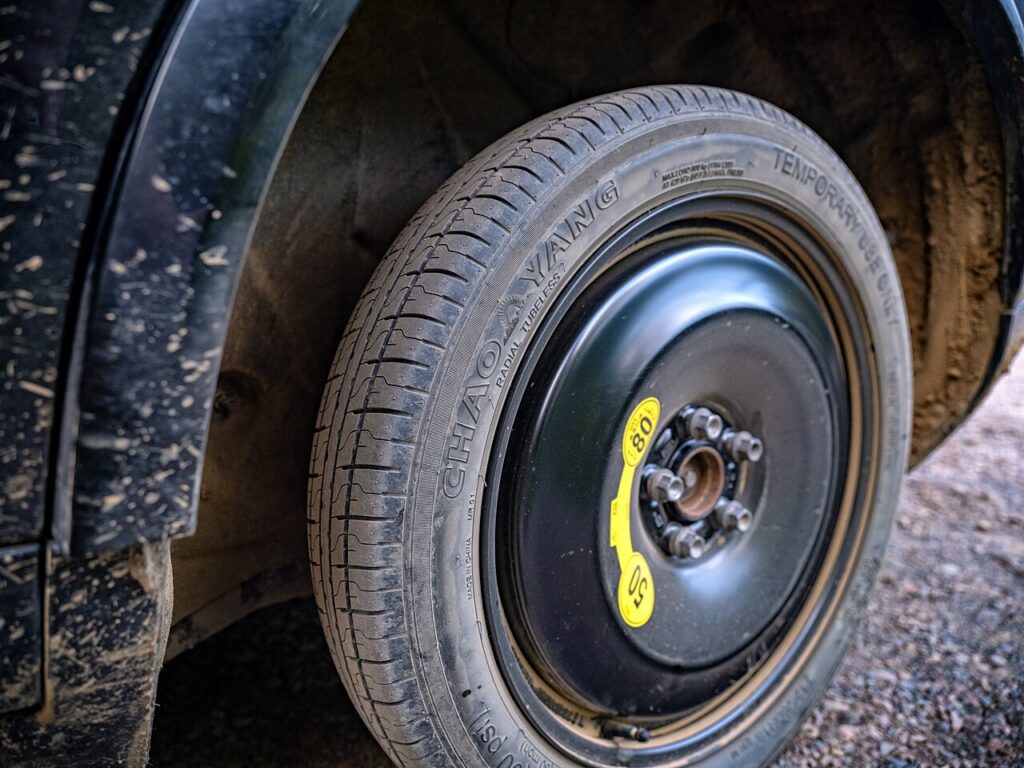
You should generally drive no faster than 50 mph on a compact spare tire, also called a donut spare, and use it only long enough to reach a tire shop or another safe destination. Most compact spares are designed for temporary use, often with a recommended travel limit of approximately 50 miles. However, your vehicle owner’s manual and the spare tire’s sidewall instructions take priority because limits vary by vehicle and tire.
A spare tire can help you get moving after a flat, but it is not a permanent replacement for a regular tire. Understanding its speed limit, driving range, and handling limitations can help you avoid unnecessary damage and reduce the risk of an accident.
What Is the Maximum Speed for a Spare Tire?
For most compact spare tires, the recommended maximum speed is 50 mph. This limit helps account for the spare’s narrower construction, different handling characteristics, and reduced suitability for extended driving.
However, not every spare tire has the same restrictions. The correct speed depends on the type of spare installed on your vehicle.
Compact Spare Tires (Donut Spares)
A compact spare is smaller and narrower than a standard tire. Automakers include these tires to save space and reduce vehicle weight, making them common in sedans, hatchbacks, and some SUVs.
When driving on a compact spare:
- Keep your speed at or below 50 mph unless the manufacturer’s instructions specify a lower limit.
- Avoid unnecessary trips and long-distance driving.
- Accelerate gradually and brake smoothly.
- Leave extra space between your vehicle and the car ahead.
- Avoid sudden turns, aggressive lane changes, and hard braking.
- Check the spare’s inflation pressure before driving, if it is safe to do so.
Compact spares are not designed to provide the same traction, stability, or durability as regular tires. Driving too fast can increase heat buildup and place additional stress on the tire.
Full-Size Spare Tires
A full-size spare is closer to the size of your vehicle’s regular tires. If it matches the recommended tire size, load rating, and other required specifications, it may be suitable for normal driving.
However, a full-size spare is not automatically safe for unlimited use. It could be an older tire, a different tire model, or a tire with different tread wear.
Check the tire’s condition and your owner’s manual before assuming it can be driven at highway speeds. A full-size spare that matches your regular tires and is in good condition may allow you to continue driving normally, but it should still be inspected if it has been stored for a long time.
Temporary Run-Flat or Mobility Solutions
Some vehicles use run-flat tires or tire mobility kits instead of traditional spare tires.
Run-flat tires have reinforced sidewalls that can support the vehicle temporarily after a loss of pressure. Their allowable speed and distance depend on the tire model, vehicle, remaining pressure, and damage.
Tire sealant and inflator kits work differently. They may temporarily seal certain small tread punctures, but they cannot fix every type of damage.
Always follow the instructions supplied with your vehicle or tire. If you are unsure which emergency tire solution your vehicle uses, have it checked by a qualified tire professional.
How Far Can You Drive on a Spare Tire?
Most compact spare tires are intended for approximately 50 miles of driving, although the exact limit depends on the manufacturer and vehicle. This distance is a temporary-use guideline, not a target you should try to reach on every trip.
The purpose of a compact spare is to help you reach a safe location or tire repair shop, not to replace your damaged tire for several days or weeks.
Several factors affect how far you can safely travel on a spare.
1. The Spare Tire’s Condition
A spare tire can deteriorate even when it is rarely used. Rubber ages over time, and prolonged storage can contribute to cracking, pressure loss, or other problems.
Before relying on a spare, check for visible damage and confirm that it is inflated to the pressure specified by the manufacturer. Compact spares often require higher inflation pressure than regular tires, so do not assume the standard pressure listed on your driver’s door applies to the spare.
If the spare is cracked, damaged, or underinflated, do not assume it is safe simply because it looks usable.
2. Road and Weather Conditions
Road conditions can affect how your vehicle behaves with a spare tire installed.
Wet roads reduce available traction, while rough pavement, potholes, and uneven surfaces can increase stress on the tire and wheel. Heavy rain can also make braking and steering more challenging when your vehicle has mismatched tires.
In Plano, Texas, summer heat is another consideration. Hot pavement and underinflation can increase tire stress, making proper inflation and cautious driving especially important.
Avoid unnecessary travel in severe weather when possible, and prioritize reaching a safe location over maintaining your usual driving schedule.
3. Your Vehicle’s Load
Passengers, luggage, tools, and other cargo add weight to your vehicle. A compact spare has specific load limitations and may not be suitable for every loading condition.
Check the vehicle and tire manufacturer’s instructions before driving with a heavy load. If your vehicle is carrying more weight than the spare can safely support, consider roadside assistance instead of continuing.
4. The Location of the Spare
Where the spare is installed can affect handling. A compact spare on the front axle may change steering and braking behavior, while a spare on the rear can affect stability.
Some vehicle manufacturers recommend installing a compact spare on a particular axle or temporarily moving a full-size wheel to another position. Follow the instructions in your owner’s manual rather than assuming the same procedure applies to every vehicle.
If the installation instructions are unclear, ask a tire professional for help.
Why You Should Not Drive Too Fast on a Spare Tire
Driving faster than the recommended limit can make an already compromised tire setup more dangerous. A compact spare differs from a regular tire in size, construction, tread, and sometimes its maximum rated speed.
Here are the main risks to understand.
Increased Heat Buildup
Tires generate heat as they flex during driving. Higher speeds can increase heat buildup, and excessive heat can weaken tire components or contribute to tire failure.
Compact spares are designed for limited, temporary use rather than sustained high-speed travel. Keeping your speed within the manufacturer’s limit reduces unnecessary stress.
Reduced Traction and Braking Performance
A compact spare generally has a smaller contact patch and a different tread design than a standard tire. This can affect grip, especially during hard braking or sudden steering maneuvers.
The difference may be more noticeable on wet or uneven roads. Leave extra following distance, slow down early when approaching intersections, and avoid abrupt movements.
Changes in Vehicle Handling
A spare tire may have a different diameter and rolling circumference from the other tires. This difference can affect the vehicle’s balance and, in some vehicles, interfere with the normal operation of systems such as traction control or all-wheel drive.
The effects vary by vehicle, so consult your owner’s manual for specific restrictions.
If the vehicle pulls unexpectedly, vibrates severely, or feels unstable after the spare is installed, pull over somewhere safe and seek assistance.
Possible Damage to Vehicle Components
Driving for too long on an improperly sized or mismatched spare can place additional strain on certain drivetrain components, particularly on some all-wheel-drive vehicles.
The spare may also have a different load capacity from the regular tire. Ignoring the manufacturer’s instructions can increase the chance of tire or vehicle damage.
For these reasons, treat the spare as a short-term solution and arrange a repair or replacement as soon as practical.
Can You Drive on a Spare Tire on the Highway?
You may be able to drive on a spare tire for a short highway trip if the spare is properly installed, inflated, undamaged, and approved for the vehicle. However, you must follow its speed and distance restrictions.
With a compact spare, highway driving may be inappropriate if traffic conditions require speeds above the tire’s maximum limit. Do not exceed 50 mph simply to keep pace with surrounding traffic.
If you cannot travel safely at the required speed, consider using roadside assistance or another safe transportation option.
When a short highway trip is unavoidable, use the following precautions:
- Stay within the spare tire’s specified speed limit.
- Keep to a lane that allows you to travel safely without impeding traffic unnecessarily.
- Avoid sudden braking and rapid acceleration.
- Maintain a larger following distance.
- Avoid long highway stretches when a nearer repair facility is available.
- Pull over safely if the vehicle develops unusual vibration, noise, or handling problems.
Never stop in a live traffic lane to inspect the spare. If you experience a problem, move to a safe location if possible and request assistance.
What Happens If You Drive Faster Than 50 MPH on a Spare?
Driving faster than the recommended limit increases the risk of excessive heat, tire damage, and loss of control. It does not mean the tire will automatically fail the moment the vehicle reaches 51 mph, but there is no reason to test that boundary.
The tire’s construction, inflation pressure, load, road surface, and condition all affect its performance. Even if the vehicle feels normal at a higher speed, that does not mean the spare is operating safely.
If you accidentally exceed the recommended speed briefly, reduce your speed smoothly and continue cautiously only if the tire and vehicle appear to be functioning normally. If you notice vibration, unusual noises, or handling changes, stop in a safe place and seek help.
Do not continue driving at an excessive speed simply because the spare has not shown obvious signs of damage.
How to Drive Safely With a Spare Tire
Taking a few precautions can help you reach a tire repair shop without placing unnecessary stress on your vehicle.
Check the Tire Pressure
Before driving, confirm that the spare is inflated to the pressure specified on its sidewall or in the owner’s manual, as applicable.
A spare that has been sitting in the trunk for months or years may have lost pressure. Underinflation can increase heat buildup and affect handling.
For additional guidance, see our article on how to check tire pressure.
Drive Slowly and Smoothly
Avoid rapid acceleration, hard braking, and sharp turns. Keep your speed below the specified maximum and adjust your driving to traffic and weather conditions.
Remember that the vehicle may not handle exactly as it did before the flat tire. Give yourself more time and space to react.
Avoid Heavy Loads and Unnecessary Trips
Do not use a compact spare for routine commuting, errands, or long-distance travel when those trips can wait until the regular tire is repaired or replaced.
If the vehicle is heavily loaded, review the manufacturer’s guidance or request assistance.
Monitor for Warning Signs
Pay attention to unusual vibration, thumping, pulling, or changes in steering. These symptoms can indicate an installation problem, low pressure, or another issue.
If you notice any of these warning signs, find a safe place to stop. Do not continue driving in the hope that the problem will disappear.
Arrange a Tire Repair or Replacement Promptly
Once you have reached a safe destination, determine whether the damaged tire can be repaired. Punctures in the appropriate tread area may be repairable, while sidewall damage and other serious defects generally require replacement.
If you need help understanding the process, read our guide on how to change a flat tire.
When Should You Replace the Spare With a Regular Tire?
You should replace a compact spare with a suitable regular tire as soon as practical, ideally after reaching a tire repair shop. Do not wait until you have driven the full recommended distance.
The right next step depends on the condition of the damaged tire.
When the Original Tire Can Be Repaired
A puncture may be repairable if it is within the repairable tread area and meets the applicable size and condition requirements. A tire professional should inspect the tire, including its internal condition when appropriate, before deciding.
A repair should not be assumed safe just because the tire can hold air again. Damage caused by driving while underinflated or flat can make a tire unsuitable for repair.
When You Need a Replacement Tire
You may need a replacement if the original tire has a damaged sidewall, a large puncture, significant internal damage, or excessive wear.
Mike’s Tires Plano offers new tires for drivers who need a replacement. If cost is a concern, you can also explore used tires that have been inspected for suitability.
The replacement should match your vehicle’s specified size, load capacity, and other requirements. Some vehicles, especially those with all-wheel drive, may require closely matched tread depths across multiple tires.
When the Spare Itself Is Damaged
If the spare is cracked, underinflated and unable to be properly inflated, or otherwise damaged, do not rely on it. Roadside assistance or towing may be the safer option.
A spare that has been stored for years should also be inspected before being counted on for an emergency.
Common Mistakes to Avoid When Using a Spare Tire
Even drivers who understand the speed limit can make mistakes that reduce safety.
Treating the spare as a permanent tire: Compact spares are temporary by design. Replace or repair the original tire promptly.
Ignoring inflation pressure: A spare can lose air while stored. Check its pressure periodically, not only after a flat.
Assuming every spare has the same limits: Full-size spares, compact spares, and run-flat tires have different requirements. Check your specific equipment.
Driving long distances because the tire feels fine: A spare can appear normal while still operating outside its intended limits.
Ignoring vehicle-specific instructions: Some vehicles have special restrictions for spare placement, drivetrain use, or maximum travel distance.
Forgetting to replace the spare after use: If your spare becomes your regular tire temporarily, you may have no backup available if another tire fails. Restore a serviceable spare to its proper storage location after the original tire is repaired or replaced.
Frequently Asked Questions About Spare Tire Speed and Distance
Can I drive 70 mph on a donut spare?
You should not drive 70 mph on a compact spare with a 50 mph maximum rating. Exceeding the specified speed increases tire stress and can compromise safety. Reduce your speed and follow the instructions for your particular spare.
Can I drive 100 miles on a spare tire?
Most compact spares are intended for approximately 50 miles, but the exact limit varies. Driving 100 miles may exceed the manufacturer’s recommendation and increase the risk of tire failure. Arrange a repair or replacement before continuing a long journey.
Can I drive on a spare tire for a week?
It is not advisable to use a compact spare for a week of routine driving. Even if you stay within the speed limit, repeated trips can add distance and stress beyond what the tire was designed to handle. Repair or replace the original tire as soon as possible.
Can I drive in the rain with a spare tire?
Driving in the rain on a properly installed spare may be possible, but it requires extra caution. Reduced traction, standing water, and longer stopping distances can increase the risk of losing control. Avoid unnecessary trips and follow all speed and distance restrictions.
Does a full-size spare have a 50 mph speed limit?
Not necessarily. A full-size spare that matches the vehicle’s specifications and is in good condition may be suitable for normal driving. However, a mismatched or older tire may have different limitations. Check the tire markings and owner’s manual before driving at normal highway speeds.
How do I know if my spare tire is safe to use?
Check the tire for cracks, visible damage, and correct inflation pressure. Confirm that its size and load rating are appropriate for the vehicle and that it is installed according to the manufacturer’s instructions. If you have any doubts about its condition, have it inspected before driving.
Get Your Flat Tire Fixed Before Relying on a Spare
A compact spare is designed to get you to a safe location, not keep you driving indefinitely. Stay within the specified speed and distance limits, and arrange a repair or replacement as soon as possible.
If you have a flat tire in Plano, TX, contact Mike’s Tires Plano for help finding a suitable tire solution and getting back on the road safely.