
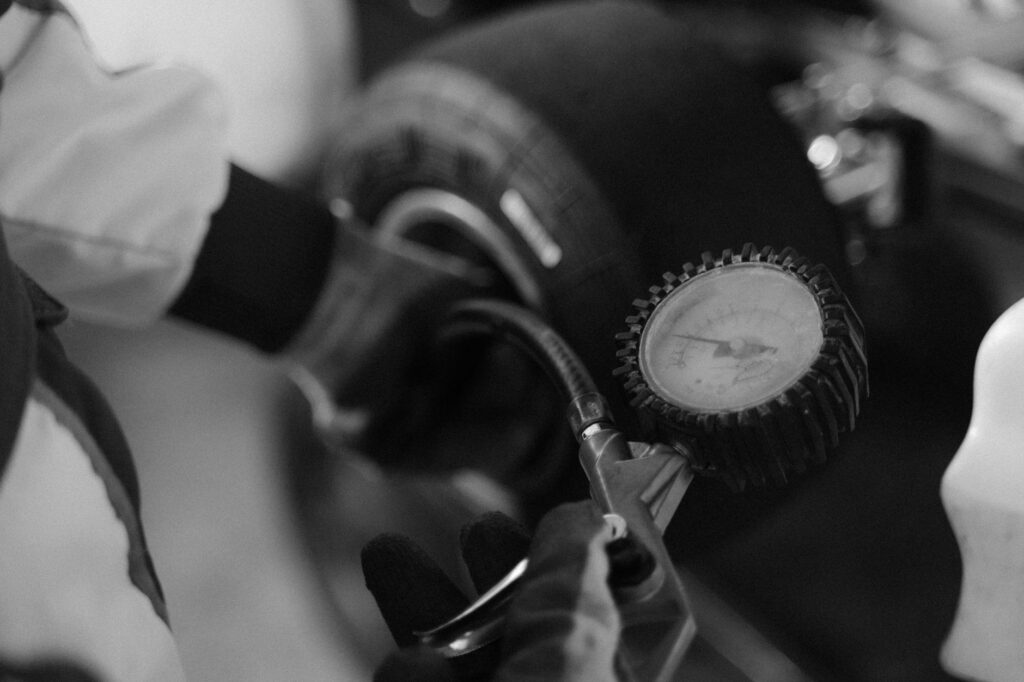
To check tire pressure, use a tire pressure gauge to measure the air pressure in each tire and compare the reading with the recommended PSI listed on your vehicle’s driver-side door-jamb sticker. Check your tires when they are cold, add or release air as needed, and repeat the process for all four tires and the spare if applicable.
Knowing how to check tire pressure helps you maintain safe handling, improve fuel efficiency, prevent uneven tread wear, and reduce the risk of tire damage. For drivers in Plano, TX, checking tire pressure regularly is especially important because seasonal temperature changes across North Texas can affect inflation levels.
In this guide, Mike’s Tires Plano explains how to check tire pressure at home or at a gas station, find the correct PSI for your vehicle, recognize warning signs, and determine when your tires need professional attention.
What You Need to Check Tire Pressure
Checking tire pressure requires only a few basic tools. You can complete the process in minutes without specialized automotive equipment.
The most important tool is a reliable tire pressure gauge. Common options include:
- Digital tire pressure gauge: Displays the pressure on a digital screen, making readings easy to understand.
- Pencil or stick gauge: Uses a sliding scale to display the pressure. It is affordable, compact, and does not require batteries.
- Dial tire pressure gauge: Displays pressure on a numbered dial and is available in various designs for home and professional use.
You may also need an air compressor or tire inflator if any tires are below the recommended pressure. A portable inflator can be convenient for home use, while a gas station air pump provides another option.
Keep your gauge in your vehicle so you can check your tires before long trips or whenever the tire pressure warning light appears.
How to Check Tire Pressure Step by Step
Follow these steps to measure your tire pressure accurately and determine whether you need to add air.
1. Check Your Tires When They Are Cold
For the most accurate reading, check your tires before driving or after your vehicle has been parked for at least three hours.
Driving generates heat through friction and flexing, which increases the air pressure inside your tires. A hot tire may therefore show a higher reading than it would when cold.
Early morning is often a convenient time to check tire pressure because your vehicle has usually been sitting overnight.
2. Find the Recommended Tire Pressure
Before measuring the pressure, locate your vehicle manufacturer’s recommended PSI. Look for a sticker on the driver-side door jamb or check your owner’s manual.
The recommended pressure may differ between the front and rear tires. Some vehicles also specify different pressures for certain load conditions.
Do not automatically use the maximum PSI printed on the tire sidewall. That number generally indicates the tire’s maximum permitted inflation pressure under specified conditions, not the recommended operating pressure for your vehicle.
3. Remove the Valve Stem Cap
Locate the valve stem on the tire and unscrew its small protective cap. Keep the cap somewhere safe while you take the measurement.
The valve stem allows you to measure the pressure and add or release air. Keeping its cap in place when you are finished helps protect the valve from dirt and moisture.
4. Attach the Tire Pressure Gauge
Press the gauge firmly and straight onto the valve stem. A brief hiss may occur as you position the gauge, but a continuous hiss usually means the gauge is not making a proper seal.
Reposition the gauge if necessary until you obtain a clear reading.
5. Read and Record the PSI
Read the number displayed on the gauge. PSI stands for pounds per square inch and is the standard unit commonly used to measure tire inflation pressure in the United States.
Compare the reading with the recommended pressure for that tire. For example, if your vehicle calls for 35 PSI and the gauge reads 31 PSI, you need to add approximately 4 PSI under cold-tire conditions.
Repeat the measurement if the reading seems inconsistent.
6. Adjust the Pressure if Necessary
If the pressure is too low, use an air compressor to inflate the tire gradually. Recheck the pressure after adding air to avoid overinflation.
If the pressure is too high when the tire is cold, release a small amount of air and measure again.
If you have been driving and the tires are hot, do not release air simply because the pressure is higher than the cold-pressure recommendation. Let the tires cool and recheck them when possible.
7. Repeat the Process for Every Tire
Check all four tires, even if only one looks underinflated or the dashboard warning light identifies a potential problem.
Do not forget the spare tire if your vehicle has one. Spare tires can lose pressure over time, and their recommended inflation requirements may differ from those of your regular tires.
When finished, reinstall the valve caps and keep a record of any tire that repeatedly loses air.
Where to Find the Correct Tire Pressure for Your Vehicle
Finding the correct PSI is one of the most important parts of tire maintenance.
Open the driver-side door and inspect the door jamb for the manufacturer’s tire information label. It typically lists the recommended cold inflation pressure for the front and rear tires, along with other vehicle and tire specifications.
You can also consult your owner’s manual if the label is missing or difficult to read.
Many passenger cars recommend approximately 30–35 PSI, but this is only a general range. Trucks, SUVs, vans, and vehicles carrying heavier loads may require different pressures.
If you have installed a different tire size or load rating from the original equipment, consult a qualified tire professional to confirm the appropriate inflation pressure.
Understanding your tire’s dimensions can also help you make informed maintenance decisions. Learn more in our guide on how to read tire size.
How Often Should You Check Tire Pressure?
Check your tire pressure at least once a month and before long road trips. You should also check it after significant temperature changes or whenever the tire pressure monitoring system (TPMS) warning light comes on.
Make tire pressure checks part of your regular vehicle maintenance routine.
You should check tire pressure:
- Monthly: Tires naturally lose some air over time, even when there is no obvious puncture.
- Before long trips: Correct inflation is particularly important before extended highway driving or carrying heavy loads.
- During seasonal temperature changes: Colder weather can lower tire pressure, while warmer conditions can increase it.
- After hitting a pothole or curb: Inspect your tires for visible damage and check for unusual pressure loss.
- When a warning light appears: Measure the pressure in every tire and investigate any tire that is losing air repeatedly.
Pressure checks work best alongside other tire inspections. Follow these tire maintenance tips for Texas heat to help protect your tires during hot weather.
What Happens When Tire Pressure Is Too Low or Too High?
Incorrect tire pressure affects tire performance, handling, braking, and tread life.
Problems Caused by Underinflated Tires
When a tire does not have enough air, its sidewalls flex more than intended. This increases heat buildup and rolling resistance.
Underinflated tires can cause:
- Uneven tread wear: Excessive wear may develop along the outer shoulders of the tread.
- Reduced fuel efficiency: Greater rolling resistance means your engine must work harder to move the vehicle.
- Poor handling: Steering response and vehicle stability can be affected.
- Excessive heat buildup: Sustained underinflation increases the risk of tire damage and failure, particularly during highway driving.
Severely underinflated tires should not be driven on because doing so can damage the tire internally, even if the tire later appears to hold air.
Problems Caused by Overinflated Tires
Overinflation can also create problems. Excessive pressure may contribute to accelerated center-tread wear and a harsher ride.
It can also affect the tire’s contact with the road and its ability to absorb impacts from potholes or other road hazards.
Neither underinflation nor overinflation is ideal. Following the vehicle manufacturer’s recommended cold pressure helps maintain appropriate tire performance and even wear.
Check your tread regularly with our guide on how to check tire tread. If your tires have reached the end of their service life, explore new tires or used tires at Mike’s Tires Plano.
How Temperature Affects Tire Pressure in Texas
Temperature changes affect the air pressure inside your tires. As temperatures fall, tire pressure generally decreases. As temperatures rise, pressure generally increases.
A useful rule of thumb is that tire pressure changes by approximately 1 PSI for every 10-degree Fahrenheit change in air temperature, although the actual change depends on the starting conditions and other factors.
This matters in Plano and throughout North Texas, where summer heat and sudden winter cold fronts can cause noticeable pressure changes.
For example, a tire inflated to the correct pressure on a warm afternoon may register a lower PSI after a cold front arrives overnight. This does not automatically mean the tire has a leak.
However, temperature changes do not rule out a puncture or another problem. If one tire consistently loses more pressure than the others, have it inspected.
Always check and adjust pressure when the tires are cold. Never release air from a hot tire simply to bring its current reading down to the cold-pressure recommendation.
For additional seasonal care advice, see our guide to tire maintenance tips for Texas heat.
How to Check Tire Pressure Without a Gauge
You cannot reliably determine the exact PSI by looking at a tire. A tire may appear properly inflated even when its pressure is too low, and visual inspection alone cannot tell you whether it meets the manufacturer’s recommendation.
If you do not have a pressure gauge, use a properly functioning gauge at a gas station or visit a tire shop for assistance.
Avoid relying on methods such as pressing the tire with your hand or comparing how much the tire appears to bulge near the ground. These methods cannot provide an accurate pressure measurement.
You should also avoid waiting until a tire looks visibly flat before checking it. By that point, the tire may already be significantly underinflated.
A small, inexpensive pressure gauge is one of the easiest tools to keep in your vehicle for routine maintenance.
How to Check Tire Pressure at a Gas Station
A gas station air compressor can help you measure and adjust tire pressure when you do not have an inflator at home.
Follow these steps:
- Park in a safe location within reach of the air hose.
- Check your vehicle’s recommended cold PSI before making adjustments.
- Remove the valve cap from the first tire.
- Attach the air hose or built-in gauge securely to the valve stem.
- Add air in short bursts if the tire is underinflated.
- Measure the pressure again using a reliable gauge.
- Release small amounts of air if necessary when the tire is cold and overinflated.
- Repeat for the remaining tires and replace the valve caps.
Built-in air pump gauges can vary in accuracy. When possible, verify the reading with your own pressure gauge.
If you have driven to the gas station, remember that the tires may be warm. Use the vehicle manufacturer’s cold-pressure recommendation as your reference, account for the temporary pressure increase from driving, and avoid releasing air from warm tires just to match the cold PSI figure.
What to Do if Your Tire Pressure Keeps Dropping
If one tire repeatedly loses air, adding air may solve the immediate problem but will not necessarily address its cause.
Common reasons for recurring pressure loss include:
- A nail, screw, or other object embedded in the tread.
- A leaking valve stem or valve core.
- A damaged wheel or a poor seal between the tire and wheel.
- Tire damage caused by potholes or impacts.
- Aging rubber or other tire deterioration.
Check the pressure when the tire is cold and note how quickly it decreases. Do not remove an embedded object yourself, since doing so may worsen the leak.
If the tire loses pressure repeatedly, arrange for a professional inspection. A tire that is visibly flat, severely underinflated, or damaged should not be driven on.
Depending on the location and severity of the damage, the tire may qualify for repair or may need replacement. Learn more about available wheel repair services at Mike’s Tires Plano.
Understanding the Tire Pressure Monitoring System (TPMS)
Many modern vehicles have a Tire Pressure Monitoring System that alerts drivers when one or more tires are significantly underinflated.
The system usually displays a horseshoe-shaped symbol with an exclamation point. However, the exact warning behavior and activation threshold vary by vehicle.
A steady warning light commonly indicates low tire pressure. A flashing light, sometimes followed by a steady light, may indicate a TPMS sensor or system fault.
If the warning light appears, check the pressure in all four tires with a gauge rather than assuming the sensor identifies every affected tire.
After correcting the pressure, the warning light may take some time or driving to clear, depending on the vehicle. Some models require a reset procedure.
If the light remains on despite correct pressure, consult your owner’s manual or have the system inspected. A TPMS warning does not replace regular manual pressure checks, and a functioning system may not alert you to every small pressure loss.
Common Tire Pressure Checking Mistakes to Avoid
Even a simple pressure check can produce misleading results if you overlook a few important details.
Avoid these common mistakes:
- Using the sidewall maximum as the target: Follow the recommended cold PSI on the vehicle’s door-jamb label.
- Checking only one tire: Pressure can vary between tires, so inspect all four.
- Measuring immediately after driving: Heat can raise the reading and affect your assessment.
- Ignoring repeated pressure loss: A tire that repeatedly needs air may have a puncture, valve leak, or other problem.
- Overinflating to compensate for expected pressure loss: Inflate to the recommended pressure rather than adding extra air as a precaution.
- Ignoring the spare tire: Check its pressure according to the vehicle and spare-tire specifications.
- Relying on appearance: A tire can be underinflated without looking flat.
- Ignoring dashboard warnings: Confirm the actual pressure and investigate persistent warnings instead of simply resetting the system.
Avoiding these mistakes helps you maintain consistent tire pressure and identify potential problems before they become more serious.
When Is It Unsafe to Drive With Low Tire Pressure?
The safety of driving on a low tire depends on how much pressure it has lost, whether the tire is damaged, and how the vehicle handles.
If the warning light comes on, pull over somewhere safe and check the tires as soon as practical. If a tire is only slightly below its recommended pressure and has no signs of damage, inflate it to the correct level before continuing normal driving.
Do not continue driving on a tire that is visibly flat, severely underinflated, bulging, or showing signs of structural damage. Stop in a safe location and arrange roadside assistance or appropriate tire service.
If you hear unusual noises, feel strong vibration, or notice the vehicle pulling to one side, stop when safe and inspect the situation.
Continuing to drive on a low tire can cause internal damage that may not be visible from the outside. If the tire has been driven on while severely underinflated, have a qualified tire professional determine whether it remains safe to use.
Frequently Asked Questions About Checking Tire Pressure
Should I check tire pressure when the tires are hot or cold?
Check tire pressure when the tires are cold, preferably before driving or after the vehicle has been parked for at least three hours. Driving increases tire temperature and can temporarily raise the pressure reading.
What is the correct tire pressure for my car?
The correct pressure is listed on the manufacturer’s label inside the driver-side door jamb or in your owner’s manual. Many passenger vehicles use approximately 30–35 PSI, but the recommended pressure varies by vehicle and tire configuration.
How often should I check tire pressure?
Check your tire pressure at least once a month, before long trips, after significant temperature changes, and whenever the TPMS warning light appears.
Can I check tire pressure after driving?
Yes, but the reading will usually be higher because the tires have warmed up. If you cannot check them cold, consult your owner’s manual for guidance and recheck them when cold before making final adjustments. Do not release air from warm tires merely to match the cold-pressure recommendation.
Can I check tire pressure without a pressure gauge?
You cannot determine the exact PSI reliably through visual inspection or by pressing the tire. Use a dedicated tire pressure gauge or have a tire shop measure the pressure for you.
Why does my tire pressure light come on when it gets cold?
Cold weather causes tire pressure to decrease, which may trigger the monitoring system if the pressure falls below its warning threshold. Check all four tires and inflate them to the recommended cold PSI. If the warning persists or one tire keeps losing air, have the tires and TPMS inspected.
Can I drive with slightly low tire pressure?
A tire that is slightly low may not show obvious symptoms, but you should correct the pressure promptly. Avoid normal driving until it is properly inflated, and do not drive on a visibly flat, severely underinflated, or damaged tire.
Does proper tire pressure improve gas mileage?
Proper inflation reduces unnecessary rolling resistance and can improve fuel efficiency. The amount of improvement depends on the vehicle, the degree of underinflation, and driving conditions.
Keep Your Tires Properly Inflated for Safer Driving
Checking tire pressure at least once a month is a simple way to support safer driving, improve tire longevity, and avoid unnecessary fuel costs. Use a reliable gauge, follow the recommended cold PSI on your vehicle’s door-jamb label, and address repeated pressure loss before it leads to more serious tire damage.
According to the U.S. Department of Energy fuel economy guidelines, keeping tires properly inflated can improve gas mileage by up to 3 percent and significantly reduces uneven tread wear.
If you need help checking your tires or identifying a pressure-related problem, visit Mike’s Tires Plano. You can also explore our new tires, used tires, and wheel repair services, or contact our team for assistance with your tire needs.