
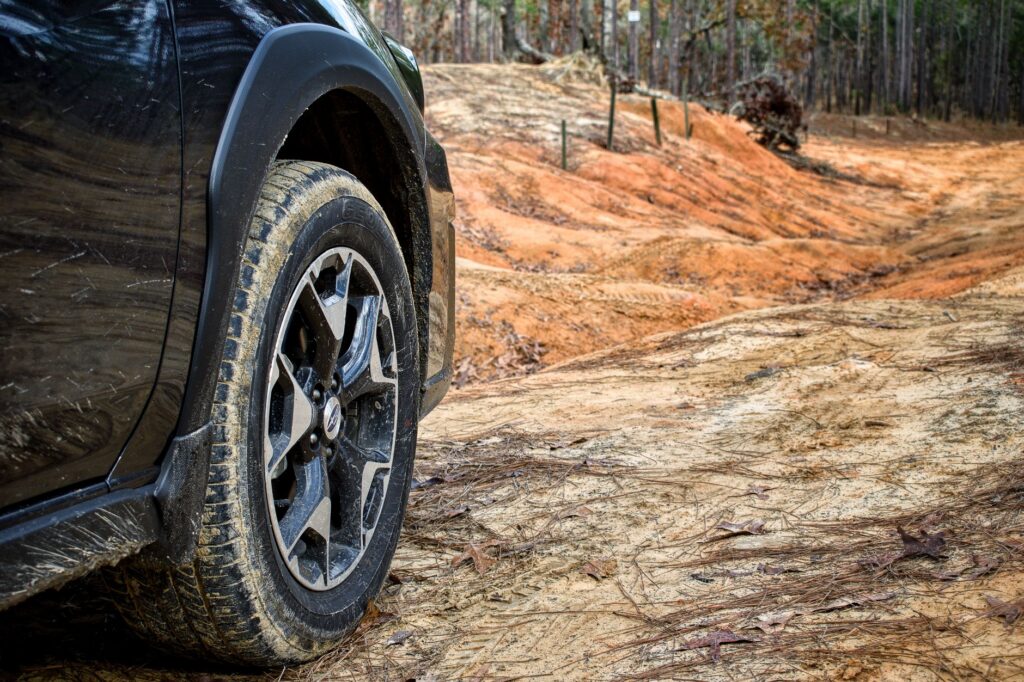
Most SUV tires weigh approximately 25 to 45 pounds each without the wheel, although smaller crossover tires may weigh less and large off-road tires can weigh 50 pounds or more. The exact weight depends on the tire’s size, construction, load rating, and tread design. If the tire is mounted on a wheel, the complete assembly can weigh considerably more.
Knowing how much an SUV tire weighs can help when choosing replacement tires, handling a full-size spare, comparing all-terrain options, or understanding how a tire upgrade may affect your vehicle. The team at Mike’s Tires Plano explains typical SUV tire weights, the difference between tire and wheel weight, and what to consider before buying tires for your vehicle.
How Much Does an SUV Tire Weigh by Size?
SUV tire weight generally increases with tire size because larger tires require more rubber, reinforcing materials, and other components. However, tires of the same size can have different weights depending on their construction and intended use.
The following chart provides approximate examples for common SUV and crossover tire sizes. These are estimates, not specifications for every tire model.
| Common tire size | Typical vehicle category | Approximate tire-only weight |
|---|---|---|
| 205/65R16 | Compact crossover | 20–24 lbs |
| 225/65R17 | Compact or midsize crossover | 24–28 lbs |
| 235/65R18 | Midsize SUV | 27–32 lbs |
| 255/60R19 | Crossover or midsize SUV | 30–36 lbs |
| 275/60R20 | Full-size SUV or light truck | 35–42 lbs |
| 285/60R20 | Large SUV or light truck | 38–46 lbs |
| 35×12.50R17 | Larger off-road or modified vehicle | 48–60 lbs or more |
Actual weights vary by manufacturer, model, load range, and tire construction. Two tires with identical size markings may not weigh the same.
To find your tire size, check the markings on the tire’s sidewall or the tire information placard inside the driver’s door area. You can also read our guide on how to read tire size numbers on the sidewall.
Tire Weight vs. Mounted Wheel Weight
When you lift a tire to change a flat or move a spare, you may be handling more than the tire itself. A mounted wheel and tire assembly includes both components, so its total weight can be substantially higher.
How much does an SUV tire weigh without a wheel?
A standard SUV tire may weigh around 25–45 pounds, depending on its size and design. Smaller crossover tires often fall below this range, while large off-road tires can weigh considerably more.
The tire-only weight is the most useful measurement when comparing tire models or checking manufacturer specifications.
How much does an SUV wheel weigh?
Wheel weight depends on its diameter, width, material, and design. As a broad estimate, some SUV wheels weigh around 15–30 pounds, although larger or specialized wheels can be lighter or heavier.
- Steel wheels: Often heavier than comparable aluminum-alloy wheels, although the exact difference depends on the design.
- Aluminum-alloy wheels: Can offer a weight advantage over some steel wheels, but not every alloy wheel is lighter than every steel wheel.
For example, a 38-pound tire mounted on a 22-pound wheel creates an assembly weighing approximately 60 pounds, before accounting for additional components.
That weight can make roadside tire changes difficult, particularly on large SUVs with high ground clearance. If you need to replace a flat, follow the instructions in your owner’s manual and read our guide on how to change a flat tire safely.
Never attempt a roadside tire change in an unsafe location. If the vehicle is on an unstable surface or the assembly is too heavy to handle safely, contact roadside assistance.
What Factors Affect SUV Tire Weight?
Tire size is important, but it is not the only factor that determines weight. The following features can make two tires of the same size weigh differently.
1. Tire size and diameter
Larger tires generally require more material, which tends to increase their weight. A large SUV tire will often weigh more than a smaller crossover tire, even if both are designed for everyday highway driving.
Width also matters because a wider tire may require additional tread and reinforcing materials. However, size alone cannot predict the exact weight.
2. Tire construction and load rating
Tires designed to carry heavier loads may use additional reinforcing materials or stronger construction. These features can increase weight compared with some standard passenger tires.
When choosing tires for an SUV, make sure the load index and other specifications meet the vehicle manufacturer’s requirements. A lighter tire is not a suitable replacement if it cannot safely support the vehicle’s load.
3. Tread design
Highway-terrain tires are generally designed for paved-road use, while all-terrain and mud-terrain tires have more aggressive tread patterns for different driving conditions.
More substantial tread blocks and reinforced construction can add weight, although the difference varies by tire model. Do not assume every all-terrain tire is heavier than every highway tire of the same size.
4. Tire type and intended use
The main categories include:
- Highway-terrain tires: Designed primarily for paved roads, with an emphasis on everyday driving.
- Touring and all-season tires: Designed for general road use, with characteristics that vary by model.
- All-terrain tires: Intended to balance paved-road use with traction on dirt, gravel, and other less-developed surfaces.
- Mud-terrain tires: Designed for more demanding off-road conditions and often feature aggressive tread patterns.
The right tire depends on your vehicle, load requirements, road conditions, and driving habits—not just its weight.
How Does Tire Weight Affect SUV Performance?
Tire weight can influence vehicle performance, but its effects depend on the tire and wheel combination and the vehicle’s design.
Acceleration and braking
Tires and wheels rotate as the vehicle moves. Increasing their mass can increase the energy needed to accelerate the vehicle, particularly when the added weight is farther from the center of rotation.
However, tire grip, compound, tread design, and road conditions also affect acceleration and braking. A lighter tire is not automatically safer or better-performing than a heavier tire.
Ride comfort and handling
Tires and wheels contribute to a vehicle’s unsprung mass—the components that are not supported by the suspension springs. Changes in this mass can influence how the suspension responds to bumps and how well the tires maintain contact with the road.
A substantial increase in tire and wheel weight may affect ride quality and handling. The actual result depends on the vehicle’s suspension, tire construction, wheel design, and overall setup.
Fuel economy
Tire weight can influence energy use, but it is only one of several factors affecting fuel economy. Rolling resistance, tire pressure, tread design, vehicle weight, aerodynamics, and driving habits all contribute.
Switching to a heavier tire may affect efficiency, especially when the replacement also has a more aggressive tread or a different rolling resistance. However, there is no universal fuel-economy penalty for every additional pound of tire weight.
If fuel efficiency is important to you, compare the specifications of tires that meet your vehicle’s requirements rather than choosing solely by weight.
Does a Heavier Tire Affect SUV Payload and Towing?
It can. When you install heavier tires and wheels, the additional weight contributes to the vehicle’s overall load. This may matter when you regularly carry passengers, luggage, equipment, or cargo close to your SUV’s permitted limits.
For example, if four replacement tire-and-wheel assemblies are each 15 pounds heavier than the original assemblies, the total additional weight is 60 pounds.
That example illustrates the added mass only; it does not establish how much towing or payload capacity will change for a specific vehicle. Vehicle ratings and equipment requirements still apply.
Before upgrading to larger or heavier tires:
- Check the vehicle’s tire-size and load-rating requirements.
- Review the manufacturer’s guidance on approved tire and wheel combinations.
- Check your vehicle’s payload, gross vehicle weight rating (GVWR), and axle ratings.
- Consider whether the new tires affect clearance, steering, or suspension components.
- Consult a qualified tire professional if you plan to use nonstandard tire sizes.
Do not assume that fitting a heavier-duty tire automatically increases your vehicle’s legal or mechanical payload capacity.
Are All-Terrain and Mud-Terrain SUV Tires Heavier?
All-terrain and mud-terrain tires can weigh more than some highway-oriented tires of the same size. Their tread patterns and construction may be designed to provide additional traction or durability in off-road conditions.
For example, a highway-terrain tire in a large SUV size might weigh in the mid-30-pound range, while some all-terrain or mud-terrain options in a comparable size may weigh 40–50 pounds or more. Exact weights vary widely by model and specification.
When are heavier off-road tires worth considering?
All-terrain or mud-terrain tires may be useful if you regularly drive on gravel, dirt roads, rocky trails, or other surfaces where their tread and construction provide advantages.
If most of your driving takes place on Plano streets and North Texas highways, a highway-oriented or road-focused all-season tire may better suit your priorities for everyday comfort and efficiency.
Before choosing an off-road tire, consider:
- How often you drive off pavement.
- Whether the tire meets your SUV’s load and size requirements.
- The effect of the new tire and wheel combination on ride comfort.
- Potential changes in noise, fuel economy, and steering response.
- Whether your vehicle requires any adjustments for the new tire size.
For additional buying guidance, read our article on how to choose car tires.
How to Find the Exact Weight of Your SUV Tire
General charts are useful for planning, but manufacturer specifications are the best way to determine the weight of a particular tire model.
Check the manufacturer’s specifications
Search for the exact brand, tire model, and size. Many tire manufacturers publish product specifications online, although the information available varies by model.
Make sure you are comparing the same size and construction. A tire’s load range or version can affect its weight even when the size marking looks similar.
Ask a tire professional
If you are comparing replacement options, a tire shop may be able to help you locate the manufacturer’s published weight and identify compatible alternatives.
At Mike’s Tires Plano, you can discuss tire options based on your vehicle and driving requirements. Confirm the availability and specifications of a particular model before making a purchase decision.
Weigh the tire yourself
If you already have the tire, you can use a suitable scale to measure its weight.
For a tire without a wheel, one method is to weigh yourself holding the tire, then subtract your weight without it. A scale with sufficient capacity and a stable platform will provide a more reliable measurement.
For a mounted assembly, measure the complete tire and wheel together. Keep in mind that this measurement includes the wheel, and possibly other attached components, so it should not be compared directly with a manufacturer’s tire-only weight.
How Heavy Is a Full-Size SUV Spare Tire?
A full-size spare generally weighs about as much as a comparable regular tire. If it is mounted on a wheel, the combined assembly may weigh 50–70 pounds or more, depending on the tire and wheel.
Compact temporary spares are often considerably lighter, but their weight and specifications vary. They are intended for temporary emergency use and must be driven within the limits provided by the tire and vehicle manufacturers.
If your SUV carries a full-size spare underneath the vehicle or in a rear-mounted carrier, check its pressure, age, and condition regularly. A spare that has been stored for a long time may not be ready for safe use.
For more guidance, read our article on how long you can drive on a spare tire.
Frequently Asked Questions About SUV Tire Weight
How much does an average SUV tire weigh?
Many standard SUV tires weigh approximately 25–45 pounds without a wheel. Smaller crossover tires can weigh around 20–28 pounds, while large off-road tires may weigh 50 pounds or more. The exact weight depends on size, construction, and load rating.
How much does a 20-inch SUV tire weigh?
A 20-inch wheel size alone does not determine tire weight. For example, some tires in a size such as 275/60R20 weigh approximately 35–42 pounds, while other 20-inch tire sizes or models may weigh more or less. Check the exact tire model’s specifications for an accurate figure.
How much does an SUV tire weigh with the rim?
The total depends on the tire and wheel combination. A 38-pound tire mounted on a 22-pound wheel would weigh approximately 60 pounds as an assembly. Larger wheels, heavier-duty tires, and specialized designs can produce different totals.
Are SUV tires heavier than car tires?
SUV tires are often heavier because many SUVs use larger tires or tires with higher load ratings. However, not every SUV tire weighs more than every passenger-car tire. Tire size, construction, and intended use are more useful comparisons than vehicle category alone.
Do heavier SUV tires reduce fuel economy?
They can affect fuel economy, but the result depends on more than weight. Rolling resistance, tire pressure, tread design, vehicle setup, and driving conditions also matter. A heavier tire may use more energy to accelerate, but weight alone does not determine its overall efficiency.
Are all-terrain tires heavier than highway tires?
Some all-terrain tires weigh more than comparable highway tires because of their tread and construction. However, the difference depends on the models being compared. Check manufacturer specifications for the same size and compatible load rating before choosing.
How heavy is a full-size spare tire for an SUV?
A full-size SUV spare may weigh approximately 25–45 pounds without a wheel, depending on its size and construction. With a wheel attached, the assembly can weigh 50–70 pounds or more. Check the spare’s actual specifications rather than relying on a general estimate.
Find the Right SUV Tires at Mike’s Tires Plano
SUV tire weight depends on size, construction, load rating, and tire type. While weight can influence handling, efficiency, and the effort required to handle a tire, it should not be the only factor in your buying decision. Always choose tires that meet your vehicle’s specifications and suit the conditions in which you drive.
The team at Mike’s Tires Plano can help you explore your tire options. Browse our selection of new tires or used tires, or contact us to discuss your vehicle’s tire needs.