
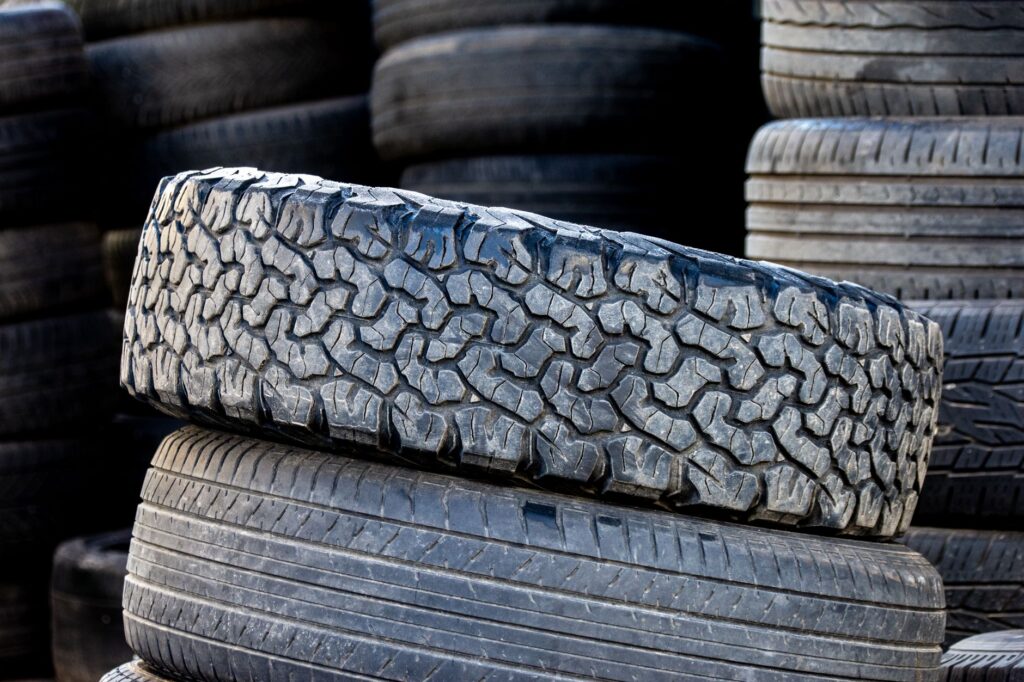
You have just changed to the spare after a flat, or maybe a roadside tech put the donut on for you, and now you are asking yourself: how long can you drive on a spare tire before you absolutely have to stop? The honest answer is it depends on whether you have a compact spare (the “donut”) or a full-size spare, and both come with firm limits you should not ignore. Here in the DFW area, where a flat on US-75 or the Dallas North Tollway can leave you miles from the nearest tire shop, knowing those limits before they matter can save you from a second, more expensive problem. This guide from Mike’s Tires Plano covers the distance and speed rules for every spare type, what happens when you push past them, and exactly how to get to a real tire as quickly and safely as possible.
Compact Spare (Donut): The Strict 50-Mile, 50-MPH Rule
The compact spare, also called a donut or temporary spare, is the small, narrow spare found in the spare tire well of most passenger cars and crossovers. It is purpose-built to get you to a tire shop — and nothing more. Here is why the limits are what they are.
Why speed matters
A compact spare uses a smaller rim diameter and a narrower, lighter tire than your regular set. The reduced footprint and thinner rubber manage heat less effectively than a full-size tire. Driving above 50 mph generates more heat than the compact spare is engineered to handle. Excess heat leads to rapid degradation and, in the worst case, a sudden blowout — which is how a manageable flat situation turns into a highway emergency. Most compact spares have “MAX 50 MPH” molded right into the sidewall. Take it seriously.
Why distance matters
The 50-mile limit exists for two reasons: heat buildup over distance and the mechanical stress on your drivetrain. A compact spare runs at a slightly different diameter than your full-size tires. On an all-wheel-drive vehicle, that difference in rotational speed forces the differential to compensate continuously, which can overheat and damage it if done over a long distance. Even on a front- or rear-wheel-drive vehicle, a smaller spare changes your vehicle’s handling geometry in ways that are manageable short-term but not ideal for extended driving.
What to avoid on a compact spare
- Highway driving above 50 mph
- Distances beyond 50–70 miles before replacing
- Car washes and automated wash systems (the spare can get caught)
- Traction control and ABS-dependent maneuvers at highway speed
- AWD/4WD engagement if your vehicle has this feature — check the owner’s manual
Full-Size Spare: No Distance Limit, But Conditions Apply
A full-size spare is a complete tire and wheel that matches your regular tires in size. Many trucks, full-size SUVs, and some older sedans carry one. If the full-size spare is properly inflated, has adequate tread, and matches your other tires in size, you can technically drive on it indefinitely. There is no 50-mile rule with a matching full-size spare.
The catch: most drivers do not maintain their full-size spare. Tire pressure in a spare drops over months and years of sitting in the trunk or under the vehicle. Before you get back on the highway, check the spare’s pressure with a gauge. Most spare tires should be inflated to 60 PSI when unused, but confirm your vehicle’s spec on the door-jamb sticker or in the owner’s manual. A properly inflated full-size spare is a proper tire — a flat or low one is not.
Also worth noting: if your spare is a different brand, model, or age than your other three tires, it will still affect your vehicle’s handling and braking characteristics. Get to a shop, confirm the spare is matching, and if not, replace the flat with a proper tire as soon as practical. You can read more about managing tire lifespan expectations to understand how a mismatched spare ages versus your other tires.
Run-Flat Tires: A Different Kind of Spare Solution
Many newer vehicles — particularly European brands — come factory-equipped with run-flat tires instead of a spare at all. Run-flats have reinforced sidewalls that support the vehicle’s weight even with zero air pressure. They are rated to travel up to 50 miles at up to 50 mph after going flat — effectively the same limits as a compact spare. The advantage is that you do not need to physically change the tire on the roadside. The disadvantage is that a run-flat tire that has been driven flat typically cannot be repaired and must be replaced, and they are more expensive than standard tires.
DFW Distances and Spare Tire Planning
Getting a flat on I-75 in Plano puts you within 5–10 miles of multiple tire shops, which is well within any spare’s range. But if you are on the Outer Loop, heading back from Frisco, or caught on I-30 east of Dallas, the nearest shop might be 15–25 miles away. In almost every Plano and DFW scenario, the standard compact spare is sufficient to get you to a tire shop — as long as you do not push speed limits while on it.
One common DFW situation: a flat on the DNT or a Tollway where the nearest exit takes you several miles off course. Do not push the speed trying to make a far exit or “limp home” on a flat before installing the spare. Pull off safely, install the spare, and drive slowly to the nearest shop.
If you need a step-by-step walkthrough of the spare change process itself, our guide on how to change a flat tire safely covers every step from lifting the jack to tightening the lug nuts correctly.
What to Do After Driving on a Spare
Once you are at a tire shop, the conversation is about replacing the flat, not just switching back. Bring the damaged tire to us and we will assess whether a repair is possible — sometimes a clean nail puncture in the tread is repairable with a proper plug-and-patch. The NHTSA tire safety guidelines are clear that sidewall punctures, run-flat damage, and tires driven completely flat are not safe to repair. We will give you an honest evaluation and your options.
Frequently Asked Questions
Can I drive on the highway with a spare tire?
On a compact spare: keep to the right lane and stay at or below 50 mph. Use local roads if at all possible and take the most direct route to a tire shop. On a full-size matching spare: you can maintain normal highway speeds, but get the flat addressed the same day if possible.
How fast can I go on a spare tire?
For a compact spare, the maximum is 50 mph. Many compact spares have this limit molded into the sidewall. Exceeding it creates dangerous heat buildup and significantly increases the risk of a second blowout. For a full-size matching spare, normal speed limits apply.
Is it okay to drive on a spare for a week?
A full-size matching spare is fine for an extended period as long as inflation and condition are good. A compact spare should not be driven for more than one or two days at most. The mismatch in size affects your vehicle’s handling, AWD/ABS systems, and over time puts stress on the differential and drivetrain.
What if I do not have a spare tire in my car?
Many newer vehicles ship without any spare to save weight and space. They typically include either run-flat tires or a tire inflation kit (a can of sealant and a compressor). The inflation kit works for small tread punctures but does not work for a sidewall blowout. If you do not have a spare and your vehicle uses standard tires, consider keeping a compact spare kit in your trunk. Ask us and we can source one sized for your vehicle.
After a flat, the fastest path to safe is a quick spare installation followed by a direct trip to the shop. The team at Mike’s Tires Plano handles flat repairs and tire replacements every day — we will assess whether your original tire can be repaired or whether you need a replacement, and get you back on North Texas roads without delay. Stop in or contact us any time, check our selection of new tires if a replacement is needed, or explore our used tires if you are looking to replace on a budget.