
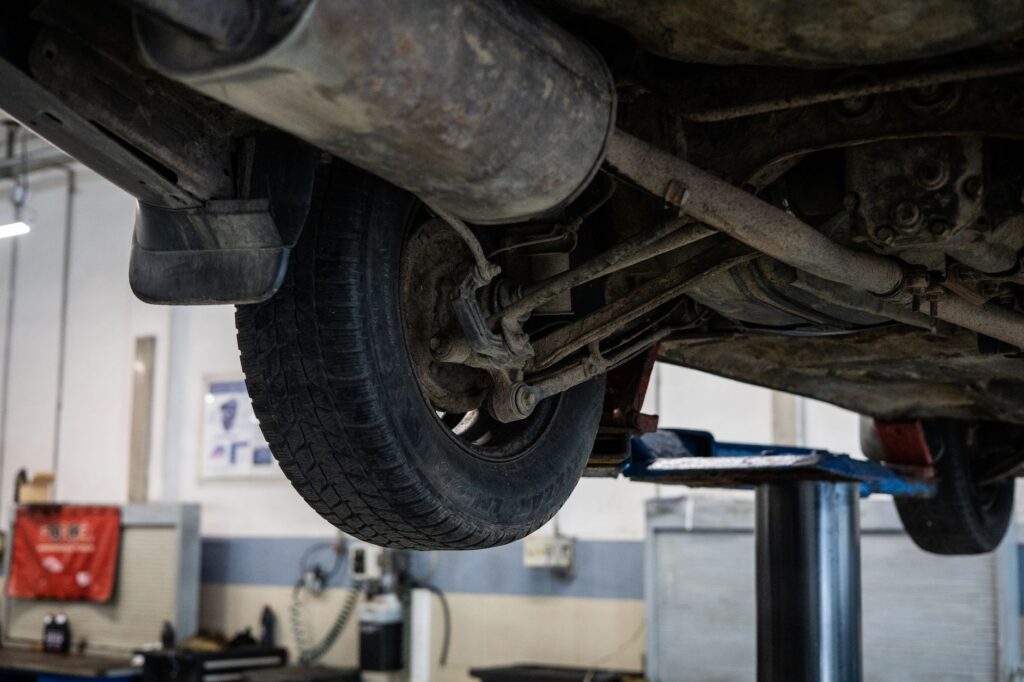
Wandering steering, a pull to one side, or tires wearing out in just a year — these are the warning signs that most drivers associate with a wheel alignment problem, but knowing the full picture of wheel alignment signs and cost helps you decide whether to act now or monitor things a little longer. Here in Plano, where construction on US-75, Legacy Drive, and the Tollway corridors regularly sends vehicles over rough patches, lane changes, and potholes, alignment drift happens faster than in smoother markets. This guide from Mike’s Tires Plano covers the signs you should never ignore, what a wheel alignment actually does, what it costs locally, and when it is time to schedule one.
What Wheel Alignment Actually Does
Wheel alignment (also called tire alignment) is not about the tires themselves — it is about the angles at which the tires contact the road. A technician adjusts three key angles: camber (tilt in or out when viewed from the front), toe (angle when viewed from above), and caster (the steering axis angle viewed from the side). When these angles are within the manufacturer’s specification, the tires roll straight, wear evenly, and the vehicle tracks true without driver input. When they drift out of spec, everything suffers — wear, handling, and fuel economy.
5 Clear Signs You Need a Wheel Alignment
Not every alignment problem announces itself the same way. Here are the five most reliable warning signs that it is time to schedule a check.
1. The car pulls left or right
Drive on a flat, straight section of road and gently release the steering wheel for a second. If the car consistently drifts to one side, that is a classic alignment symptom. A slight pull can also come from uneven tire pressure or a cupped tire, so check inflation first — but if pressure is fine and the pull persists, alignment is the likely culprit.
2. The steering wheel is off-center on a straight road
Look at your steering wheel while driving a straight, level road. If the logo or center spoke is noticeably tilted left or right when you are going straight, your alignment is off. Even a small off-center angle causes unnecessary mental effort to keep the car tracking straight.
3. Uneven or rapid tread wear
An out-of-spec alignment scrubs tires unevenly. The most common pattern is feathering (tread blocks worn on one edge but not the other) or excessive inner or outer edge wear. If one tire is wearing much faster than the others, check alignment before buying replacements — new tires installed on a misaligned vehicle will wear out just as fast. Learn more about spotting wear patterns in our guide on how to check tire tread.
4. Vibration in the steering wheel
Vibration at highway speed often points to a balance issue rather than alignment, but out-of-spec toe alignment can cause a shimmy that is hard to distinguish without a technician. If balancing does not resolve the vibration, alignment is the next step.
5. Recent impact or accident
Hitting a large pothole, a curb, or a parking barrier at any real speed can knock the alignment out of spec instantly. You may not notice a pull right away, but the geometry is often thrown off even when there is no visible damage. If you have hit something significant, a quick alignment check is cheap insurance against a ruined set of tires.
How Plano Road Conditions Affect Alignment
DFW drivers know that construction season never really ends. The US-75 reconstruction corridor, road patches along Spring Creek Parkway, and the constant surface changes around Legacy Drive and the Legacy West development area create real alignment hazards. A tire dropping into a pothole at highway speed applies thousands of pounds of force to your suspension in a fraction of a second. Over many small hits and lane changes on rough pavement, alignment gradually shifts even when no single impact is dramatic. The National Highway Traffic Safety Administration recommends regular alignment checks as part of tire maintenance, particularly after any significant road impact.
Most drivers who come to Mike’s Tires Plano for alignment say they noticed something was off but put it off. The longer you drive on a misaligned car, the more tire tread you lose and the worse the fuel economy gets. It is one of those maintenance items where waiting costs more than acting.
Wheel Alignment Cost in Plano, TX
Alignment pricing varies by shop, equipment, and whether your vehicle needs a two-wheel or four-wheel alignment.
Two-wheel (front) alignment
For vehicles with a solid rear axle — many trucks and older rear-wheel-drive cars — a front (two-wheel) alignment is standard. Expect to pay approximately $60–$100 in the Plano area.
Four-wheel alignment
Most modern vehicles with independent rear suspension require a four-wheel alignment, where the technician sets all four corners. This is more thorough and typically runs $100–$175 in the Plano market. It is the right choice for crossovers, most sedans, and any vehicle where the rear wheels are individually adjustable.
What drives price differences
Price differences between shops usually come down to three things: equipment quality (laser vs. four-wheel computerized alignment systems), labor rates, and whether the shop includes a print-out of before-and-after measurements. At Mike’s Tires Plano, we use computerized alignment equipment and give you a measurement report so you can see exactly what was adjusted.
How Often Should You Get a Wheel Alignment?
Most manufacturers and tire shops recommend a wheel alignment check every 12,000 to 15,000 miles as a preventive measure, or at least once a year. In practice, most Plano drivers should check every time they rotate their tires — which should happen every 5,000 miles or so. That makes it easy to catch alignment drift early, before it eats through tread. Our guide on how often to rotate tires explains the rotation schedule in detail.
Regardless of mileage, get an alignment check any time you:
- Hit a significant pothole, curb, or road debris
- Notice any of the five warning signs above
- Install a new set of tires (protects the investment from day one)
- Have any suspension or steering component replaced
- Are involved in any collision, even a minor fender-bender
Frequently Asked Questions
Can I do a wheel alignment myself?
No. Wheel alignment requires a computerized alignment rack that measures the exact angles of all four wheels simultaneously. It is not a DIY job — the equipment alone costs tens of thousands of dollars. What you can do is recognize the warning signs early and bring the vehicle in before the problem gets expensive.
Does wheel alignment affect tire wear?
Directly and significantly. Even a small misalignment — fractions of a degree — forces the tire to scrub sideways with every rotation. Over 10,000 miles, that adds up to substantial tread loss on one edge. Misalignment is one of the most common reasons drivers find themselves replacing tires much earlier than expected.
How long does a wheel alignment take?
A standard four-wheel alignment typically takes 30–60 minutes on a modern computerized rack. If additional suspension components need adjustment or there is rust or worn hardware involved, it can take longer. Call ahead and we can give you a time estimate for your specific vehicle.
Does alignment affect fuel economy?
Yes. Misaligned tires create additional rolling resistance as they scrub against the road surface at a slight angle instead of rolling cleanly forward. The effect is usually modest — maybe 1–3% in fuel economy — but over 10,000 highway miles it adds up to real dollars at the pump.
If any of the warning signs above sound familiar, the fastest way to protect your tires and your safety is to schedule an alignment check. The team at Mike’s Tires Plano handles wheel alignments on cars, trucks, and SUVs every day. Stop in or contact us to book a time, ask about our new tire installation packages that include alignment, or check out our wheel repair guide if you suspect damage beyond alignment. We are here to keep your vehicle rolling straight on North Texas roads.